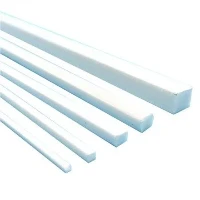
As a supplier of FRP (Fiber Reinforced Plastic) Flange beam Channel, I often get asked about the abrasion resistance of our products. In this blog, I'll delve into the science behind FRP's ability to withstand abrasion, share real - world examples, and discuss how it compares to other materials.
Understanding FRP Flange beam Channel
FRP is a composite material made of a polymer matrix reinforced with fibers, typically glass or carbon. The combination of these materials results in a product that is strong, lightweight, and corrosion - resistant. FRP Flange beam Channel is a specific type of FRP product, which is widely used in various industries, including construction, transportation, and chemical processing.
The structure of FRP Flange beam Channel gives it unique properties. The flanges provide additional strength and stability, while the channel shape is ideal for applications where load - bearing and support are required. But when it comes to abrasion, how well does it perform?


The Science of Abrasion Resistance in FRP
Abrasion occurs when a material is subjected to friction against another surface. The ability of FRP to resist abrasion depends on several factors. Firstly, the type of fibers used in the composite plays a crucial role. Glass fibers, for example, are relatively hard and can provide good abrasion resistance. Carbon fibers, on the other hand, are stronger and more rigid, which can also contribute to better abrasion performance.
The resin matrix in FRP also affects abrasion resistance. A high - quality resin can bind the fibers together tightly, preventing them from being easily dislodged during abrasion. Some resins are specifically formulated to enhance abrasion resistance, such as those with added fillers or additives.
Real - World Applications and Abrasion Resistance
In construction, FRP Flange beam Channel is often used in flooring systems, especially in areas with high foot traffic or where heavy equipment is moved. For example, in industrial warehouses, the channels are used to support the flooring. The constant movement of forklifts and other machinery can cause abrasion. However, FRP's abrasion - resistant properties ensure that the channels can withstand this wear and tear over a long period.
In the transportation industry, FRP Flange beam Channel is used in the manufacturing of vehicle components. For instance, it can be used in the frames of buses or trucks. These components are exposed to various environmental factors and friction from moving parts. The abrasion resistance of FRP helps to maintain the structural integrity of these components, reducing the need for frequent replacements.
Comparing FRP with Other Materials
When compared to traditional materials like steel and aluminum, FRP has some distinct advantages in terms of abrasion resistance. Steel is a strong material, but it is prone to rust and corrosion, which can accelerate abrasion. Aluminum, while lightweight, is relatively soft and can be easily scratched.
FRP, on the other hand, is corrosion - resistant and has a high strength - to - weight ratio. Its abrasion resistance is comparable to or even better than that of steel and aluminum in many applications. This makes it a more cost - effective and durable choice in the long run.
Our Product Range and Abrasion Resistance
As a supplier, we offer a wide range of FRP Flange beam Channel products. Our products are designed to meet the highest standards of quality and performance. We use high - quality fibers and resins to ensure excellent abrasion resistance.
One of our popular products is the GPO - 3 U Beam Channel Profile. This product is known for its outstanding abrasion resistance and is suitable for a variety of applications. Another product, SMC Molding Automotive, is specifically designed for the automotive industry, where abrasion resistance is crucial. We also offer Carbon Sheet Molding Compound, which provides enhanced strength and abrasion resistance due to the use of carbon fibers.
Factors Affecting Abrasion Resistance in FRP Flange beam Channel
While FRP has good abrasion resistance, there are still some factors that can affect its performance. The surface finish of the FRP is one such factor. A smooth surface finish can reduce friction and thus improve abrasion resistance. The thickness of the FRP also matters. Thicker FRP Flange beam Channel generally has better abrasion resistance as it can withstand more wear before the underlying fibers are exposed.
The operating environment also plays a role. If the FRP is exposed to harsh chemicals or extreme temperatures, it can affect the resin matrix and reduce its abrasion resistance. However, our products are designed to be resistant to a wide range of environmental conditions.
Testing and Quality Assurance
We conduct rigorous testing on our FRP Flange beam Channel products to ensure their abrasion resistance. We use industry - standard testing methods, such as the Taber Abrasion Test, to measure the amount of material loss due to abrasion. Our quality control team monitors every step of the manufacturing process to ensure that the products meet or exceed the required standards.
Conclusion
In conclusion, FRP Flange beam Channel can indeed withstand abrasion. Its unique combination of fibers and resin matrix provides excellent abrasion resistance, making it a suitable choice for a wide range of applications. Whether it's in construction, transportation, or other industries, our FRP products offer a durable and cost - effective solution.
If you are interested in purchasing FRP Flange beam Channel for your project, we would be more than happy to discuss your requirements. Contact us to start a procurement discussion and find the best solution for your needs.
References
- "Composite Materials Handbook" by the Department of Defense
- "Abrasion Resistance of Fiber - Reinforced Polymers" in Journal of Composite Materials