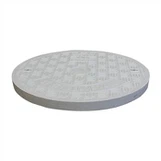
As a supplier of SMC (Sheet Molding Compound) Insulation Sheets, one question that frequently arises in the industry and among our clients is whether SMC Insulation Sheet can be recycled. In this blog, we'll delve into the science behind SMC, explore the possibilities and challenges of recycling, and provide up - to - date information on this crucial environmental aspect.
Understanding SMC Insulation Sheets
SMC Insulation Sheets are composite materials made from a mixture of thermosetting resin, fiberglass reinforcement, and various additives. These sheets are highly valued in the electrical and manufacturing industries for their excellent electrical insulation properties, mechanical strength, and resistance to heat, chemicals, and fire. For instance, in electrical applications, they are used as arc isolators, where their insulation capabilities are of utmost importance. You can learn more about electrical - grade fiberglass sheets suitable for arc isolators in our product catalog Electrical Grade Fiberglass Mat GPO - 3 Laminated Sheet For Arc Isolators.
The thermosetting nature of the resin in SMC is a key characteristic. Unlike thermoplastics, which can be melted and reshaped multiple times, thermosetting resins undergo a chemical cross - linking reaction during the curing process. Once cured, they form a rigid, three - dimensional network structure that cannot be easily re - melted or reshaped.
The Case for Recycling SMC Insulation Sheets
The motivation for recycling SMC Insulation Sheets is two - fold: environmental and economic. From an environmental perspective, SMC waste, if not properly managed, can end up in landfills, occupying valuable space and potentially causing long - term pollution. By recycling SMC, we can reduce the demand for virgin raw materials, conserve natural resources, and lower the carbon footprint associated with the production of new insulation sheets.
On the economic side, recycling can provide a cost - effective alternative to raw material procurement. If recycled SMC can be transformed into useful products, it can contribute to cost savings in manufacturing processes. This is especially appealing to industries that use large quantities of SMC Insulation Sheets, such as the automotive, electrical, and construction sectors.
Challenges in Recycling SMC Insulation Sheets
Despite the potential benefits, recycling SMC Insulation Sheets is not without its challenges. The main hurdle lies in the thermosetting nature of the resin. As mentioned earlier, the cross - linked structure of thermosetting resins makes it difficult to break them down into their original components for re - use.
One commonly used method is mechanical recycling. This involves shredding the SMC sheets into small particles, which can then be used as fillers in new composite materials or other products. However, the mechanical properties of the recycled material are often inferior to those of the virgin SMC. The chopped fibers in the shredded material may not provide the same level of reinforcement, and the presence of other additives in the recycled mix can affect the performance of the new product.
Another approach is chemical recycling, which aims to break the cross - links in the thermosetting resin through chemical reactions. This method has the potential to recover the original raw materials, such as the resin and the fiberglass. However, chemical recycling processes are often complex, energy - intensive, and require expensive equipment. Moreover, the chemicals used in the process may pose environmental risks if not properly managed.
Current Recycling Initiatives and Technologies
In recent years, there have been significant efforts to develop more effective recycling technologies for SMC Insulation Sheets. Some research projects are exploring the use of supercritical fluids to break down the thermosetting resin. Supercritical fluids have unique properties that allow them to penetrate and dissolve the cross - linked polymer network under specific temperature and pressure conditions.


There are also initiatives focused on improving mechanical recycling methods. For example, some companies are developing advanced shredding and sorting techniques to produce higher - quality recycled SMC particles. These particles can then be used in more demanding applications, such as the production of SMC Sheet with improved performance.
Applications of Recycled SMC Insulation Sheets
Even with the challenges, recycled SMC Insulation Sheets have found some practical applications. In the construction industry, recycled SMC particles can be used as aggregates in concrete, improving its strength and durability. In the automotive sector, they can be incorporated into non - structural components, such as interior panels and under - hood covers.
Moreover, recycled SMC can be used to produce Unsaturation Resin Fiberglass Electrical Insulating Board. Although the electrical properties of these boards may be slightly different from those made with virgin SMC, they can still meet the requirements of many low - to - medium - voltage applications.
Future Outlook
The future of SMC Insulation Sheet recycling looks promising, but it will require continued research, development, and investment. As the demand for sustainable materials grows, there will be more incentives for industries to adopt recycling technologies and incorporate recycled SMC into their products.
In addition, regulatory pressures are likely to play a significant role. Governments around the world are increasingly implementing policies to promote recycling and reduce waste. This will encourage manufacturers to find more effective ways to recycle SMC Insulation Sheets and other composite materials.
Conclusion
In conclusion, while recycling SMC Insulation Sheets presents several challenges due to the thermosetting nature of the resin, there are viable solutions and ongoing initiatives in this area. Mechanical and chemical recycling methods are being continuously improved, and recycled SMC is already being used in various applications.
As a SMC Insulation Sheet supplier, we are committed to promoting sustainable practices in our industry. We are actively involved in researching and supporting recycling technologies to ensure that our products have a minimal environmental impact.
If you are interested in learning more about our SMC Insulation Sheets, their recycling potential, or if you have a procurement need, we encourage you to contact us. We look forward to discussing how our high - quality SMC products can meet your specific requirements.
References
- "Composite Recycling Technology: Principles and Applications" by John M. Kenny
- "Thermoset Composites Recycling: State - of - the - Art and Future Trends" in the Journal of Composite Materials
- Industry reports from the Electrical and Electronics Manufacturers' Association on sustainable insulation materials.