What are the Load - Bearing Capacities of SMC U Beam Channel Profile?
As a supplier of SMC U Beam Channel Profile, I've witnessed firsthand the growing demand for this versatile product. SMC, or Sheet Molding Compound, offers a unique blend of strength, durability, and corrosion resistance, making it an ideal choice for a wide range of applications. In this blog, we'll delve into the load - bearing capacities of SMC U Beam Channel Profile, exploring the factors that influence them and how they compare to other materials.
Understanding SMC U Beam Channel Profile
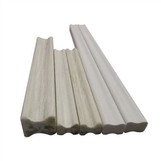
Before we discuss load - bearing capacities, let's briefly understand what SMC U Beam Channel Profile is. SMC is a composite material made from a mixture of resin, glass fibers, and fillers. The U - beam channel profile is a structural shape with a U - shaped cross - section. This profile is commonly used in various industries, including construction, electrical, and transportation, due to its excellent mechanical properties and ease of installation.
Factors Affecting Load - Bearing Capacities
-
Material Composition
The resin system used in SMC plays a crucial role in determining the load - bearing capacity. Different resins offer different levels of strength and stiffness. For example, epoxy - based SMC may have higher strength compared to polyester - based SMC. The glass fiber content also significantly impacts the load - bearing capacity. Higher glass fiber percentages generally result in greater strength and stiffness, allowing the U - beam to withstand heavier loads.

-
Profile Dimensions
The dimensions of the SMC U Beam Channel Profile, such as the height, width, and thickness of the walls, directly affect its load - bearing capacity. A taller and wider U - beam with thicker walls will generally have a higher load - bearing capacity than a smaller and thinner one. The shape of the U - beam, including the radius of the corners, can also influence how the load is distributed within the profile. -
Installation Method
Proper installation is essential for achieving the maximum load - bearing capacity of SMC U Beam Channel Profile. If the U - beam is not installed correctly, such as being poorly supported or not properly fastened, the load - bearing capacity can be significantly reduced. For example, if the U - beam is used as a support beam and is not firmly anchored to the foundation, it may experience excessive deflection under load, leading to premature failure. -
Environmental Conditions
The environment in which the SMC U Beam Channel Profile is used can also affect its load - bearing capacity. Factors such as temperature, humidity, and exposure to chemicals can degrade the material over time. High temperatures can cause the resin to soften, reducing the stiffness and strength of the U - beam. Exposure to corrosive chemicals can also weaken the material, leading to a decrease in load - bearing capacity.
Calculating Load - Bearing Capacities
Determining the exact load - bearing capacity of an SMC U Beam Channel Profile requires a combination of theoretical calculations and experimental testing. Engineers typically use structural analysis software to model the U - beam under different loading conditions. These models take into account the material properties, profile dimensions, and installation details to predict the maximum load the U - beam can withstand.
Experimental testing is also an important part of the process. Samples of the SMC U Beam Channel Profile are tested in a laboratory under controlled conditions to measure their actual load - bearing capacity. This data is then used to validate the theoretical models and ensure the safety and reliability of the product.
Comparison with Other Materials
-
Steel U - Beams
Steel is a traditional material for U - beams and is known for its high strength and stiffness. However, steel U - beams are prone to corrosion, especially in harsh environments. SMC U Beam Channel Profile, on the other hand, offers excellent corrosion resistance, making it a better choice for applications where corrosion is a concern. In terms of load - bearing capacity, while steel U - beams may have a higher initial strength, SMC U - beams can provide sufficient strength for many applications, especially when considering their long - term durability. -
GPO - 3 U Beam Channel Profile
GPO - 3 U Beam Channel Profile is another alternative to SMC U Beam Channel Profile. GPO - 3 is a glass - polyester laminate with good electrical insulation properties. SMC U - beams generally have higher mechanical strength compared to GPO - 3 U - beams. However, GPO - 3 may be preferred in applications where electrical insulation is the primary requirement. -
Aluminum U - Beams
Aluminum U - beams are lightweight and have good corrosion resistance. However, their strength is generally lower than that of steel and SMC U - beams. SMC U Beam Channel Profile can offer a good balance between strength and weight, making it suitable for applications where both high load - bearing capacity and relatively low weight are required.
Applications and Load - Bearing Requirements
-
Construction
In construction, SMC U Beam Channel Profile can be used as support beams in buildings, bridges, and other structures. The load - bearing requirements in construction depend on the type of structure and the expected loads. For example, in a residential building, the U - beams may need to support the weight of the floors, walls, and roof. In a bridge, the U - beams may need to withstand the weight of traffic, including heavy vehicles. -
Electrical Industry
In the electrical industry, SMC U Beam Channel Profile is often used as support structures for electrical equipment. The load - bearing requirements in this application are typically lower compared to construction. However, the U - beams still need to support the weight of the electrical components and any additional loads that may be applied during installation or maintenance. -
Transportation
In the transportation industry, SMC U Beam Channel Profile can be used in the construction of vehicles, such as buses and trains. The load - bearing requirements in transportation depend on the type of vehicle and the expected loads. For example, in a bus, the U - beams may need to support the weight of the passengers, seats, and other equipment.
Conclusion
The load - bearing capacities of SMC U Beam Channel Profile are influenced by various factors, including material composition, profile dimensions, installation method, and environmental conditions. By understanding these factors, engineers and designers can select the appropriate SMC U - beam for their specific application. SMC U Beam Channel Profile offers a viable alternative to traditional materials such as steel, aluminum, and GPO - 3, providing a good balance between strength, durability, and corrosion resistance.
If you are interested in learning more about our SMC U Beam Channel Profile or have specific load - bearing requirements for your project, we invite you to contact us for a detailed discussion. Our team of experts is ready to assist you in selecting the right product and ensuring its proper installation. You can also explore some of our other SMC products, such as SMC Molding Manhole Cover and SMC Molding Press Enclosure.
References
- "Composite Materials Handbook" by ASM International
- "Structural Analysis of Beams and Frames" by James M. Gere
- Industry reports on SMC materials and their applications.