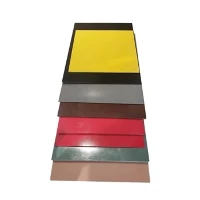
In the realm of construction and engineering, the selection of materials for high - load applications is a critical decision that can significantly impact the performance, durability, and cost - effectiveness of a project. One material that has been gaining increasing attention in recent years is Fiber - Reinforced Polymer (FRP) pultruded profiles. As a leading supplier of FRP pultruded profiles, I am often asked whether these profiles are suitable for high - load applications. In this blog post, I will explore the properties of FRP pultruded profiles, their performance under high loads, and their potential in various high - load scenarios.
Understanding FRP Pultruded Profiles
FRP pultruded profiles are composite materials made by combining a polymer resin matrix with reinforcing fibers, typically glass, carbon, or aramid fibers. The pultrusion process involves pulling continuous fibers through a resin bath and then through a heated die, where the resin cures and forms a solid, continuous profile. This manufacturing method results in profiles with a high fiber - to - resin ratio, which gives them excellent mechanical properties.
One of the key advantages of FRP pultruded profiles is their high strength - to - weight ratio. Compared to traditional materials such as steel and concrete, FRP profiles can provide comparable or even higher strength while being significantly lighter. This makes them ideal for applications where weight reduction is crucial, such as in aerospace, marine, and transportation industries.
Another important property of FRP pultruded profiles is their corrosion resistance. The polymer resin matrix protects the reinforcing fibers from environmental factors such as moisture, chemicals, and UV radiation, making them suitable for use in harsh environments. This corrosion resistance can lead to longer service life and reduced maintenance costs compared to metal profiles.
Performance Under High Loads
When considering the suitability of FRP pultruded profiles for high - load applications, it is essential to understand their mechanical behavior under stress. FRP profiles exhibit different load - bearing characteristics compared to traditional materials.
Tensile Strength
FRP pultruded profiles have excellent tensile strength, which is the ability to resist forces that pull the material apart. The continuous fibers in the profiles are highly effective in carrying tensile loads, and the resin matrix helps to transfer the load evenly between the fibers. This makes FRP profiles suitable for applications such as cable stays, suspension bridges, and tension members in trusses.
Compressive Strength
While FRP profiles generally have good compressive strength, it is important to note that their performance in compression can be affected by factors such as fiber orientation and profile geometry. In some cases, local buckling or crushing may occur under high compressive loads. However, with proper design and reinforcement, FRP profiles can be engineered to withstand significant compressive forces. For example, in columns and struts, the cross - sectional shape and the use of internal reinforcement can enhance the compressive performance of the profiles.
Flexural Strength
Flexural strength refers to the ability of a material to resist bending. FRP pultruded profiles have high flexural strength, which makes them suitable for applications such as beams, joists, and bridge decks. The combination of the high - strength fibers and the resin matrix allows the profiles to distribute the bending loads effectively and resist deformation.


High - Load Applications of FRP Pultruded Profiles
Construction and Infrastructure
In the construction industry, FRP pultruded profiles are increasingly being used in high - load applications. For example, FRP Pultruded Rectangular Profile can be used as structural beams in buildings, providing a lightweight and corrosion - resistant alternative to steel beams. In bridge construction, FRP profiles can be used for decking, girders, and stay cables, reducing the overall weight of the bridge and increasing its durability.
Industrial Applications
In industrial settings, FRP pultruded profiles are used in high - load applications such as conveyor systems, platforms, and support structures. The corrosion resistance of FRP profiles makes them ideal for use in chemical plants, wastewater treatment facilities, and other environments where traditional materials would quickly corrode. For instance, Fiberglss Bar FRP 25x25mm Square Bar can be used as a support member in a corrosive industrial environment.
Marine Applications
The marine industry also benefits from the use of FRP pultruded profiles in high - load applications. FRP profiles are used in boat hulls, decks, and superstructures, providing high strength and light weight. Their corrosion resistance makes them well - suited for the harsh marine environment, where exposure to saltwater and UV radiation can cause significant damage to traditional materials. FRP Pultruded Half Round Profile can be used in various marine applications where a curved profile is required.
Challenges and Considerations
While FRP pultruded profiles offer many advantages for high - load applications, there are also some challenges and considerations that need to be addressed.
Design and Engineering
Proper design and engineering are crucial when using FRP profiles in high - load applications. The unique mechanical properties of FRP materials require a different approach to design compared to traditional materials. Engineers need to have a good understanding of the behavior of FRP profiles under different loading conditions and use appropriate design codes and standards.
Connection Design
The connection between FRP profiles and other components is another critical aspect. The lack of ductility in FRP materials compared to metals means that connection design needs to be carefully considered to ensure reliable load transfer. Innovative connection methods, such as adhesive bonding and mechanical fastening, need to be used to ensure the integrity of the structure.
Cost
The initial cost of FRP pultruded profiles can be higher than that of traditional materials. However, when considering the long - term costs, including maintenance, replacement, and energy savings due to weight reduction, FRP profiles can be a cost - effective solution. In addition, as the demand for FRP profiles increases and manufacturing technology improves, the cost is expected to become more competitive.
Conclusion
In conclusion, FRP pultruded profiles are indeed suitable for high - load applications. Their high strength - to - weight ratio, corrosion resistance, and excellent mechanical properties make them a viable alternative to traditional materials in various industries. However, proper design, engineering, and connection details are essential to ensure the safe and efficient use of FRP profiles under high loads.
If you are considering using FRP pultruded profiles for your high - load application, I encourage you to contact us for further discussion and to explore the wide range of profiles we offer. Our team of experts is ready to assist you in selecting the right profiles and providing technical support throughout your project. Let's work together to find the best FRP solution for your high - load requirements.
References
- Bank, L. C. (2006). Fiber - Reinforced Polymer Composites for Civil Infrastructure. Wiley - Interscience.
- Taher, M., & Rizkalla, S. H. (2012). FRP Composites in Civil Infrastructure: State - of - the - Art Review. Journal of Composites for Construction, 16(1), 1 - 18.
- ACI 440.1R - 15. (2015). Guide for the Design and Construction of Structural Concrete Reinforced with FRP Bars. American Concrete Institute.