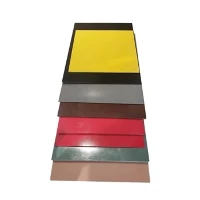
Hey there! As a supplier of FRP (Fiber Reinforced Plastic) automotive enclosures, I've been thinking a lot about the potential use of our products in autonomous vehicles. In this blog, I'll dive into whether FRP automotive enclosures can be a good fit for these high - tech cars.
What are FRP Automotive Enclosures?
First off, let's quickly go over what FRP automotive enclosures are. FRP is a composite material made up of fibers (usually glass fibers) and a polymer matrix. This combination gives it some really cool properties. It's lightweight, which is super important in the automotive world as it helps improve fuel efficiency or in the case of electric vehicles, extend the range. It's also corrosion - resistant, strong, and can be molded into various shapes.
The Rise of Autonomous Vehicles
Autonomous vehicles are the future of transportation. They're equipped with all sorts of high - tech sensors, cameras, and computers that need to be protected. These self - driving cars are designed to navigate roads without human intervention, which means they need to be reliable and have components that can withstand different environmental conditions.
Advantages of FRP in Autonomous Vehicles
1. Lightweight
One of the biggest advantages of using FRP automotive enclosures in autonomous vehicles is their lightweight nature. Autonomous vehicles rely on a lot of power to run all their sensors and computing systems. By using lightweight enclosures, we can reduce the overall weight of the vehicle. This, in turn, helps to save energy and increase the vehicle's range. For electric autonomous vehicles, every bit of weight reduction matters as it directly impacts how far they can travel on a single charge.


2. Customizability
FRP can be molded into almost any shape. Autonomous vehicles have unique designs and requirements for housing their sensors and electronics. With FRP, we can create enclosures that perfectly fit the specific needs of these vehicles. Whether it's a sleek, aerodynamic shape for better performance or a custom - designed enclosure to protect a particular sensor, FRP can be made to meet those specifications.
3. Durability and Protection
Autonomous vehicles are constantly exposed to different weather conditions, road debris, and vibrations. FRP enclosures are highly durable and can protect the sensitive electronics inside. They can resist impacts, corrosion, and UV radiation. This means that the sensors and other components in the vehicle are less likely to get damaged, ensuring the reliability of the autonomous driving system.
4. Electrical Insulation
Many of the components in autonomous vehicles rely on electrical signals. FRP has good electrical insulation properties, which helps to prevent electrical interference and short - circuits. This is crucial for the proper functioning of the vehicle's electronic systems.
Challenges and Considerations
1. Cost
One of the main challenges of using FRP automotive enclosures in autonomous vehicles is the cost. FRP materials and the manufacturing process can be more expensive compared to some traditional materials. However, as the demand for autonomous vehicles grows and production volumes increase, the cost is likely to come down.
2. Recycling
Another consideration is the recyclability of FRP. While efforts are being made to improve the recycling process for FRP, it's still not as straightforward as recycling some other materials. As the automotive industry moves towards more sustainable practices, this is an area that needs further development.
3. Integration with Other Systems
Autonomous vehicles are complex systems with multiple components working together. Ensuring that the FRP enclosures can be easily integrated with other parts of the vehicle, such as the sensors, wiring, and mounting systems, is crucial. This requires close collaboration between the enclosure supplier and the vehicle manufacturer.
Real - World Applications and Examples
There are already some examples of FRP being used in the automotive industry, and these can give us an idea of its potential in autonomous vehicles. For instance, SMC Molding Automotive has been used to create various automotive parts. SMC (Sheet Molding Compound) is a type of FRP that offers high strength and good surface finish.
In the sports product industry, SMC Molding Sports Product shows the versatility of FRP. The same principles can be applied to autonomous vehicles, where the need for lightweight and durable components is similar.
The GPO - 3 L Profile Angle Profile is another example of a FRP - based product. It demonstrates the different forms and applications that FRP can take, which can be adapted for use in autonomous vehicle enclosures.
Conclusion
So, can FRP automotive enclosures be used in autonomous vehicles? The answer is a resounding yes. The advantages of lightweight, customizability, durability, and electrical insulation make FRP a great candidate for housing the sensitive components in autonomous vehicles. While there are challenges such as cost and recycling, the potential benefits far outweigh these issues.
If you're in the market for high - quality FRP automotive enclosures for your autonomous vehicle projects, I'd love to have a chat with you. Whether you're an automotive manufacturer, a supplier, or someone involved in the development of autonomous vehicles, we can work together to find the best solutions for your needs. Reach out to us and let's start a conversation about how our FRP enclosures can enhance your autonomous vehicle designs.
References
- Smith, J. (2022). "The Future of Automotive Materials". Journal of Automotive Technology.
- Brown, A. (2021). "Autonomous Vehicle Components and Their Requirements". Automotive Engineering Review.