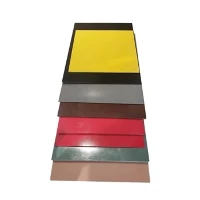
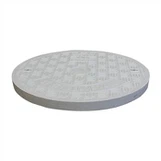
As a trusted supplier of FRP insulation sheets, I often receive inquiries from customers about the suitability of our products in wet areas. This is a crucial question, as the performance of insulation materials can be significantly affected by moisture. In this blog post, I will delve into the properties of FRP insulation sheets and explore whether they can be effectively used in wet environments.
Understanding FRP Insulation Sheets
Fiber Reinforced Plastic (FRP) insulation sheets are composite materials made of a polymer matrix reinforced with fibers. The polymer matrix is typically a thermosetting resin, such as epoxy, polyester, or vinyl ester, while the fibers can be glass, carbon, aramid, or other materials. FRP insulation sheets offer several advantages, including high strength-to-weight ratio, excellent corrosion resistance, good electrical insulation properties, and low thermal conductivity.
These properties make FRP insulation sheets suitable for a wide range of applications, including electrical insulation, structural components, chemical processing equipment, and marine applications. However, the question remains: can they withstand the challenges posed by wet areas?
Properties of FRP Insulation Sheets in Wet Conditions
Moisture Resistance
One of the key factors determining the suitability of FRP insulation sheets in wet areas is their moisture resistance. FRP materials have inherent moisture resistance due to the presence of the polymer matrix, which acts as a barrier against water penetration. However, the degree of moisture resistance can vary depending on the type of resin used, the fiber content, and the manufacturing process.
Epoxy resins, for example, are known for their excellent moisture resistance and are often used in applications where exposure to water is expected. Polyester resins, on the other hand, are more susceptible to moisture absorption, but they can be formulated with additives to improve their water resistance. Vinyl ester resins offer a good balance between moisture resistance and cost, making them a popular choice for many applications.
In addition to the resin type, the fiber content and orientation can also affect the moisture resistance of FRP insulation sheets. Higher fiber content generally results in better moisture resistance, as the fibers provide a physical barrier against water penetration. The orientation of the fibers can also influence the moisture absorption rate, with fibers aligned in the direction of water flow providing better protection.
Electrical Insulation Properties
Another important consideration when using FRP insulation sheets in wet areas is their electrical insulation properties. Moisture can have a detrimental effect on the electrical insulation performance of materials, as it can increase the conductivity of the material and reduce its dielectric strength.
FRP insulation sheets are designed to provide excellent electrical insulation properties, even in the presence of moisture. The polymer matrix acts as an insulator, preventing the flow of electric current, while the fibers provide mechanical support and enhance the overall strength of the material. However, it is important to note that the electrical insulation properties of FRP insulation sheets can be affected by prolonged exposure to moisture, especially if the material is not properly sealed or protected.
To ensure the long-term electrical insulation performance of FRP insulation sheets in wet areas, it is recommended to use a high-quality resin system with good moisture resistance and to apply a protective coating or sealant to the surface of the material. This can help to prevent water from penetrating the material and causing damage to the electrical insulation properties.


Mechanical Properties
The mechanical properties of FRP insulation sheets can also be affected by exposure to moisture. Moisture can cause the polymer matrix to swell and weaken, which can lead to a reduction in the strength and stiffness of the material. In addition, prolonged exposure to moisture can cause the fibers to delaminate from the matrix, which can further compromise the mechanical integrity of the material.
To minimize the impact of moisture on the mechanical properties of FRP insulation sheets, it is important to select a resin system with good moisture resistance and to use a proper manufacturing process that ensures good adhesion between the fibers and the matrix. In addition, it is recommended to use a protective coating or sealant to prevent water from penetrating the material and causing damage to the mechanical properties.
Applications of FRP Insulation Sheets in Wet Areas
Despite the potential challenges posed by moisture, FRP insulation sheets can be successfully used in a variety of wet area applications. Some common applications include:
Electrical Insulation in Wet Environments
FRP insulation sheets are widely used in electrical insulation applications, including transformers, switchgear, motors, and generators. In wet environments, such as power plants, water treatment facilities, and marine applications, FRP insulation sheets can provide excellent electrical insulation performance, even in the presence of moisture.
For example, Unsaturation Resin Fiberglass Electrical Insulating Board is a high-performance FRP insulation board that is specifically designed for electrical insulation applications in wet environments. It offers excellent electrical insulation properties, high mechanical strength, and good moisture resistance, making it an ideal choice for use in transformers, switchgear, and other electrical equipment.
Structural Components in Wet Areas
FRP insulation sheets can also be used as structural components in wet areas, such as bridges, walkways, and platforms. In these applications, the high strength-to-weight ratio and excellent corrosion resistance of FRP materials make them a popular choice over traditional materials, such as steel and concrete.
For example, UTR GPO-3 Electrical Grade Fiberglass Unsaturation Resin Sheet is a high-strength FRP insulation sheet that is commonly used as a structural component in electrical equipment and other applications. It offers excellent mechanical properties, good electrical insulation properties, and high resistance to corrosion and moisture, making it an ideal choice for use in wet environments.
Chemical Processing Equipment in Wet Conditions
FRP insulation sheets are also widely used in chemical processing equipment, such as tanks, pipes, and valves. In wet conditions, the excellent corrosion resistance of FRP materials makes them a popular choice over traditional materials, such as stainless steel and carbon steel.
For example, High Temperature SMC Insulation Sheet is a high-performance FRP insulation sheet that is specifically designed for use in high-temperature and chemical-resistant applications. It offers excellent mechanical properties, good electrical insulation properties, and high resistance to corrosion and moisture, making it an ideal choice for use in chemical processing equipment and other applications where exposure to harsh chemicals and high temperatures is expected.
Conclusion
In conclusion, FRP insulation sheets can be effectively used in wet areas, provided that the appropriate resin system, fiber content, and manufacturing process are selected. The moisture resistance, electrical insulation properties, and mechanical properties of FRP insulation sheets can be optimized to meet the specific requirements of wet area applications.
As a supplier of FRP insulation sheets, I am committed to providing high-quality products that meet the needs of our customers. If you have any questions about the suitability of our products in wet areas or if you would like to discuss your specific requirements, please do not hesitate to contact us. We look forward to working with you to find the best insulation solution for your application.
References
- "Fiber Reinforced Plastic (FRP) Composites: Materials, Manufacturing, and Design" by David Hull and Timothy W. Clyne
- "Handbook of Polymer Science and Technology" edited by Herman F. Mark, John E. Kresta, and Robert A. Grossman
- "Composite Materials: Science and Applications" by David A. Dillard and John W. Gillespie Jr.