As a well - established supplier of FRP (Fiber - Reinforced Plastic) insulation sheets, I've witnessed firsthand the significance of various factors that influence the quality of our products. Among these, the density of FRP insulation sheets plays a pivotal role. This blog will delve deep into how the density of FRP insulation sheets relates to their quality, offering insights that can be invaluable for anyone in need of insulation solutions.


Understanding FRP Insulation Sheets
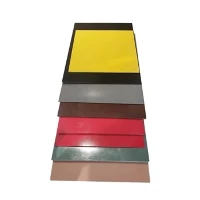
FRP insulation sheets are composite materials made of fibers, typically glass fibers, and a polymer matrix. They are widely used in electrical insulation applications due to their excellent electrical properties, mechanical strength, and resistance to corrosion. We offer a range of FRP insulation sheets, including SMC Yellow Insulation Sheet, SMC Polyester Fiberglass Sheet Flat Board, and GPO - 3 Green Insulation Sheet, each with unique characteristics tailored to different requirements.
The Science Behind Density in FRP Insulation Sheets
Density is defined as the mass per unit volume of a material. In the case of FRP insulation sheets, the density is affected by several factors. The amount and type of fibers used, the resin - to - fiber ratio, and the manufacturing process all contribute to the final density of the sheet.
When a higher proportion of fibers is incorporated into the polymer matrix, it generally increases the density of the FRP insulation sheet. Additionally, the type of resin used also plays a role. Some resins are denser than others, and the curing process can also affect the overall compactness of the material, thereby influencing density.
Density and Mechanical Strength
One of the most obvious correlations between density and quality is in terms of mechanical strength. A higher - density FRP insulation sheet typically exhibits greater mechanical strength. The fibers in the composite material act as reinforcement, and when they are more closely packed (resulting in a higher density), they can better withstand external forces such as compression, tension, and bending.
For example, in applications where the insulation sheet may be subject to mechanical stresses, such as in electrical switchgear or motor covers, a higher - density sheet is often preferred. It can resist cracking, warping, and deformation, ensuring the long - term reliability of the equipment. Our SMC Polyester Fiberglass Sheet Flat Board with an optimized density offers superior mechanical strength, making it suitable for demanding industrial environments.
Density and Electrical Insulation Properties
Electrical insulation is the primary function of FRP insulation sheets. Density has a significant impact on these electrical properties. A denser sheet generally has better electrical insulation performance. The closely packed fibers and resin matrix in a high - density sheet reduce the presence of voids and air gaps, which can act as conductive paths for electrical current.
In high - voltage applications, such as transformers and power transmission lines, maintaining a high level of electrical insulation is crucial. Our GPO - 3 Green Insulation Sheet is engineered to have a specific density that ensures excellent electrical insulation, protecting against electrical breakdown and ensuring the safety and efficiency of the electrical system.
Density and Chemical Resistance
Chemical resistance is another important aspect of the quality of FRP insulation sheets. In industrial settings, these sheets may be exposed to various chemicals, including acids, alkalis, and solvents. A higher - density FRP insulation sheet is more likely to have better chemical resistance.
The compact structure of a high - density sheet makes it more difficult for chemicals to penetrate the material. The fibers and resin matrix form a barrier that can resist the corrosive effects of chemicals. For example, in chemical processing plants or wastewater treatment facilities, our SMC Yellow Insulation Sheet with a suitable density provides reliable protection against chemical attack, extending the service life of the insulation and the equipment it protects.
Density and Thermal Properties
The density of FRP insulation sheets also affects their thermal properties. A denser sheet generally has better thermal insulation capabilities. The closely packed structure of the material reduces the transfer of heat through conduction and convection.
In applications where temperature control is important, such as in electrical enclosures or heating systems, a high - density FRP insulation sheet can help maintain a stable temperature. It can prevent heat from escaping or entering the system, improving energy efficiency and protecting the electrical components from overheating.
Challenges in Controlling Density
While a higher density often correlates with better quality in many aspects, controlling the density during the manufacturing process is not without challenges. Maintaining a consistent density across the entire sheet is crucial. Variations in density can lead to uneven mechanical, electrical, and chemical properties, compromising the overall quality of the product.
Factors such as the mixing of fibers and resin, the pressure and temperature during the curing process, and the uniformity of the raw materials can all affect density. At our manufacturing facility, we use advanced production techniques and quality control measures to ensure that each FRP insulation sheet meets the specified density requirements.
Selecting the Right Density for Your Application
Choosing the appropriate density of an FRP insulation sheet depends on the specific requirements of your application. If you need a sheet with high mechanical strength for a structural application, a higher - density sheet would be a better choice. For applications where electrical insulation is the primary concern, consider a sheet with a density optimized for electrical performance.
If you are unsure about which density and type of FRP insulation sheet is best for your needs, our team of experts is here to assist you. We can provide detailed technical advice and product recommendations based on your specific application and requirements.
Conclusion
In conclusion, the density of FRP insulation sheets is closely related to their quality. It affects mechanical strength, electrical insulation properties, chemical resistance, and thermal performance. As a supplier of FRP insulation sheets, we understand the importance of density control and strive to produce high - quality products that meet the diverse needs of our customers.
If you are in the market for FRP insulation sheets, whether it's SMC Yellow Insulation Sheet, SMC Polyester Fiberglass Sheet Flat Board, or GPO - 3 Green Insulation Sheet, we invite you to contact us to discuss your requirements. Our team is ready to provide you with the best insulation solutions and support your projects.
References
- "Composite Materials: Science and Engineering" by P. K. Mallick
- "Electrical Insulation for Rotating Machines" by G. C. Stone et al.
- Industry reports on FRP insulation materials and manufacturing processes.