As a seasoned supplier of FRP pultruded profiles, I've witnessed firsthand the challenges that come with ensuring the long - term integrity of these products. Delamination, a common issue in FRP pultruded profiles, can significantly impact the performance and lifespan of the profiles. In this blog, I'll share some practical strategies to prevent the delamination of FRP pultruded profiles.
Understanding Delamination in FRP Pultruded Profiles
Before diving into prevention methods, it's crucial to understand what delamination is. Delamination refers to the separation of layers within the FRP (Fiber - Reinforced Polymer) composite. This can occur due to various factors, including improper manufacturing processes, environmental conditions, and mechanical stress.
In FRP pultruded profiles, the fibers are embedded in a resin matrix. When delamination happens, the bond between the fibers and the resin weakens, leading to a loss of structural integrity. This can result in reduced strength, stiffness, and durability of the profiles.
Manufacturing - Related Prevention Strategies
Material Selection
The choice of materials plays a vital role in preventing delamination. High - quality fibers and resins are essential. For fibers, materials like glass fibers are commonly used in FRP pultruded profiles due to their high strength - to - weight ratio. When selecting resins, it's important to choose those with good adhesion properties and chemical resistance. For example, epoxy resins are often preferred for their excellent bonding characteristics with fibers.
Process Control
Proper process control during the pultrusion process is crucial. The temperature, speed, and pressure during pultrusion need to be carefully monitored and adjusted. If the temperature is too high, the resin may degrade, leading to poor bonding between the fibers and the resin. On the other hand, if the temperature is too low, the resin may not cure properly, also resulting in delamination.

The speed of the pultrusion process should be optimized to ensure that the resin has enough time to fully impregnate the fibers. If the speed is too fast, the resin may not penetrate the fibers evenly, leading to weak spots and potential delamination.
Environmental Considerations
Moisture Resistance
Moisture can be a major cause of delamination in FRP pultruded profiles. Water can penetrate the resin matrix and weaken the bond between the fibers and the resin. To prevent this, it's important to apply a moisture - resistant coating to the profiles. This coating can act as a barrier, preventing water from reaching the inner layers of the composite.
UV Protection
Exposure to ultraviolet (UV) radiation can also cause degradation of the resin in FRP pultruded profiles. UV rays can break down the chemical bonds in the resin, leading to a loss of adhesion between the fibers and the resin. Applying a UV - resistant coating can help protect the profiles from the harmful effects of UV radiation.
Mechanical Stress Management
Design Optimization
Proper design of the FRP pultruded profiles can help reduce the risk of delamination due to mechanical stress. The profiles should be designed to distribute stress evenly across the structure. For example, avoiding sharp corners and edges can prevent stress concentrations, which can lead to delamination.
Installation Considerations
During installation, it's important to follow the manufacturer's guidelines. Improper installation, such as over - tightening fasteners or using incorrect installation methods, can cause excessive stress on the profiles, leading to delamination.
Quality Assurance and Testing
In - process Inspection
Regular in - process inspection during the manufacturing of FRP pultruded profiles is essential. This can help identify any potential issues early on, such as uneven resin distribution or fiber misalignment, which can lead to delamination.
Post - production Testing
After production, the profiles should undergo rigorous testing to ensure their quality. Non - destructive testing methods, such as ultrasonic testing, can be used to detect any internal delamination. Destructive testing, such as bending and tensile tests, can also be performed to evaluate the overall strength and integrity of the profiles.
Our Product Offerings
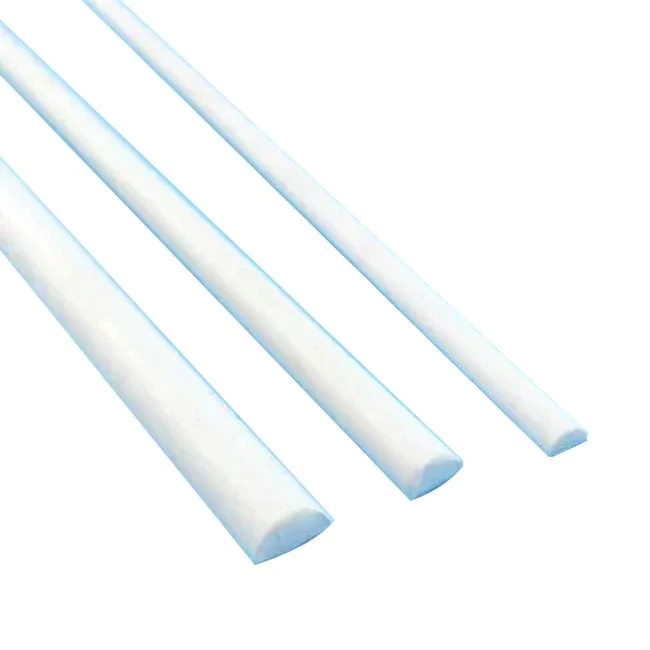
As a FRP pultruded profile supplier, we offer a wide range of high - quality products. For example, our Transformer FRP Dovetail Cushion Block is designed with high - strength fibers and a durable resin matrix to prevent delamination. Our FRP Pultruded Dogbone And Corner Profile is engineered to withstand mechanical stress and environmental factors, ensuring long - term performance. And our FRP Pultruded Half Round Profile is manufactured using strict quality control measures to prevent delamination.
Conclusion
Preventing the delamination of FRP pultruded profiles requires a comprehensive approach that includes proper material selection, process control, environmental protection, mechanical stress management, and quality assurance. By implementing these strategies, we can ensure the long - term performance and durability of our FRP pultruded profiles.
If you're interested in purchasing high - quality FRP pultruded profiles or have any questions about delamination prevention, please feel free to contact us for a detailed discussion and procurement negotiation.
References
- ASTM International. (20XX). Standard Test Methods for Fiber - Reinforced Plastic (FRP) Composite Materials.
- Gibson, R. F. (2012). Principles of Composite Material Mechanics. CRC Press.