You may have already learned a lot about insulation materials, but do you know the differences between fiberglass board, epoxy board, and FR4 board? Today, I will take everyone to learn about the relevant knowledge~and explain it in detail for you.
1. Different uses. The main raw materials for producing circuit boards are alkali free glass cloth, fiber paper, and epoxy resin. Glass fiber board: substrate glass fiber cloth, epoxy board: adhesive is epoxy resin, FR4: substrate cotton fiber paper. These three types are all fiberglass panels.
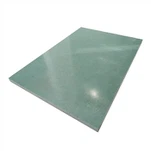
2. Different colors. Usually, the epoxy board on the market is phenolic epoxy, yellow. Not used as a hard circuit board substrate for electrical insulation purposes. FR4 is a NEMA standard pure epoxy board, with a normal color of dark green, which is the color of epoxy.
3. Different properties. Fiberglass board has characteristics such as sound absorption, insulation, environmental protection, and flame retardancy. FR-4, also known as fiberglass board; Fiberglass board; FR4 reinforcement plate; FR-4 epoxy resin board; Flame retardant insulation board; Epoxy board, FR4 light board. Epoxy glass cloth board; Drill and pad the circuit board.
Characteristics of fiberglass board:
The main technical characteristics and applications of white FR4 optical board: stable electrical insulation performance, good flatness, smooth surface, no pits, thickness tolerance exceeding the standard, suitable for products with high-performance electronic insulation requirements, such as FPC reinforcement plate, high-temperature resistant plate for soldering furnace, carbon film, precision planetary wheel, PCB testing frame, electrical (electrical) equipment insulation partition, insulation pad, transformer insulation part, motor insulation part, deflection coil terminal board, etc, Electronic switch insulation board, etc.
Glass fiber board, also known as fiberglass board, is generally used for soft packaging base, and then wrapped with fabric, leather, etc. to create beautiful wall and ceiling decorations. It is widely used. It has the characteristics of sound absorption, insulation, insulation, environmental protection, flame retardancy, etc.