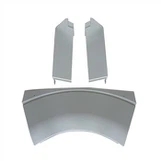
Installing FRP L Beam Channel on a composite surface can seem like a daunting task, but with the right approach and a bit of know - how, it can be a smooth process. As a proud supplier of FRP L Beam Channel, I've seen first - hand how these versatile products can enhance the structural integrity of composite surfaces. In this post, I'll walk you through the steps to install FRP L Beam Channel on a composite surface, sharing some tips and tricks along the way.
Why Choose FRP L Beam Channel for Composite Surfaces?
FRP, or Fiberglass Reinforced Plastic, is known for its high strength - to - weight ratio, corrosion resistance, and low maintenance. An L Beam Channel, with its unique L - shaped cross - section, provides excellent reinforcement and support to composite surfaces. Whether you're working on a marine project, an industrial application, or a DIY home improvement task, FRP L Beam Channel can be a game - changer.
Tools and Materials You'll Need
Before you start the installation, gather the necessary tools and materials. You'll need a measuring tape, a saw (preferably a fine - toothed saw suitable for cutting FRP), a drill with appropriate drill bits, screws or bolts, a level, and of course, the FRP L Beam Channel itself. Make sure your tools are in good condition to ensure a precise installation.
Step 1: Prepare the Composite Surface
The first step is to prepare the composite surface where you'll install the FRP L Beam Channel. Clean the surface thoroughly to remove any dirt, dust, or debris. Any contaminants on the surface can affect the adhesion and stability of the L Beam Channel. Use a mild detergent and water to clean the composite surface, and then dry it completely.
Next, measure the area where you plan to install the L Beam Channel. Take accurate measurements to ensure that the channel fits properly. Mark the installation area using a pencil or a marker. Make sure your marks are straight and accurate; a level can be very helpful here.


Step 2: Cut the FRP L Beam Channel
Once you have the measurements, it's time to cut the FRP L Beam Channel to the appropriate length. Use a fine - toothed saw to make a clean cut. When cutting, make sure to wear safety glasses and a dust mask to protect yourself from any flying debris. Take your time and make a steady cut to ensure a straight and even edge.
Step 3: Drill Holes
After cutting the L Beam Channel to size, it's necessary to drill holes for the screws or bolts. The spacing of the holes will depend on the size and weight of the load the L Beam Channel will support. As a general rule, drill holes at regular intervals, about 6 - 12 inches apart. Make sure the drill bit you use is appropriate for the material of the composite surface and the size of the screws or bolts you'll be using.
Step 4: Position the L Beam Channel
Carefully position the L Beam Channel on the marked area of the composite surface. Use a level to ensure that the channel is straight and level. This is crucial for the proper functioning of the L Beam Channel and the overall stability of the structure. If the channel is not level, it can cause uneven stress distribution, which may lead to premature failure.
Step 5: Secure the L Beam Channel
Once the L Beam Channel is in the correct position, it's time to secure it to the composite surface. Insert the screws or bolts through the holes in the channel and into the composite surface. Use a screwdriver or a wrench to tighten the screws or bolts, but be careful not to overtighten as it may damage the composite surface or the L Beam Channel.
Step 6: Check for Stability
After securing the L Beam Channel, check for stability. Gently shake the channel to see if it's loose. If there is any movement, tighten the screws or bolts further. Make sure the L Beam Channel is firmly attached to the composite surface.
Tips and Tricks
- When cutting the FRP L Beam Channel, consider using a lubricant to reduce friction and prevent overheating of the saw blade.
- If you're installing the L Beam Channel in a high - load area, you may want to use additional support brackets for extra stability.
- Before drilling holes, it's a good idea to test the drill bit on a small, inconspicuous area of the composite surface to ensure the bit is suitable and won't cause any damage.
Related Products
As a supplier, I can also tell you about some of our other great products. For example, we have the SMC Molding Press Enclosure, which is perfect for protecting equipment in industrial settings. The SMC Angle Profile is another useful product that can be used for various structural purposes. And if you're in need of something for underground applications, our SMC Molding Manhole Cover is a top - quality choice.
Contact for Purchase
If you're interested in buying FRP L Beam Channel for your project or want to explore our other products, don't hesitate to reach out. Our team is always ready to assist you with product selection, installation advice, and pricing. We look forward to helping you with your project and providing you with high - quality FRP products.
References
- Fiberglass Reinforced Plastic Handbook: A comprehensive guide on FRP materials and applications.
- Composite Structures Installation Manual: Provides detailed information on installing components on composite surfaces.