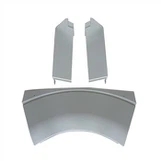
In the dynamic landscape of the automotive industry, the demand for innovative and high - performance components is constantly on the rise. As a leading SMC (Sheet Molding Compound) molding automotive parts supplier, I am well - versed in the market demands that drive the industry forward. This blog will delve into the various market demands for SMC molded automotive parts and explore why they have become such an integral part of modern vehicle manufacturing.
Lightweight and Fuel Efficiency
One of the primary drivers in the automotive market is the quest for improved fuel efficiency. With increasing environmental concerns and stricter regulations regarding carbon emissions, automakers are constantly seeking ways to reduce the weight of vehicles. SMC molded parts offer a significant advantage in this regard. SMC materials are composed of a thermosetting resin matrix filled with glass fibers or other reinforcements. These materials are lighter than traditional metal components such as steel and aluminum, which helps to reduce the overall weight of the vehicle.
A lighter vehicle requires less energy to move, resulting in improved fuel economy and reduced CO₂ emissions. For instance, replacing metal body panels with SMC molded counterparts can lead to a noticeable reduction in weight without compromising on strength and durability. This is especially important for electric vehicles (EVs), where reducing weight can extend the vehicle's range, a critical factor for consumer acceptance.
Design Flexibility
Automotive design is an ever - evolving field, with manufacturers constantly striving to create vehicles that stand out in terms of style and functionality. SMC molding technology offers unparalleled design flexibility, allowing for the creation of complex shapes and intricate details that would be difficult or impossible to achieve with traditional manufacturing methods.


SMC can be molded into a variety of forms, from smooth, aerodynamic body panels to structural components with high - strength requirements. Designers can incorporate features such as ribs, bosses, and undercuts into the parts during the molding process, eliminating the need for additional assembly steps. This not only simplifies the manufacturing process but also allows for more innovative and efficient vehicle designs. For example, the ability to create seamless body panels reduces wind drag, improving both vehicle aesthetics and performance.
Corrosion Resistance
Automotive parts are exposed to a variety of harsh environmental conditions, including moisture, salt, and chemicals. Corrosion can significantly reduce the lifespan of metal components, leading to safety issues and costly repairs. SMC molded parts are inherently corrosion - resistant due to their non - metallic nature.
Unlike metals, SMC materials do not rust or corrode when exposed to water or chemicals. This makes them ideal for use in under - the - hood components, exterior body parts, and other areas of the vehicle that are prone to corrosion. In regions where vehicles are frequently exposed to salt on the roads during winter, the use of SMC molded parts can result in longer - lasting and more reliable vehicles.
High - Volume Production
The automotive industry operates on a large scale, with high - volume production being a necessity to meet consumer demand. SMC molding is a highly efficient manufacturing process that is well - suited for large - scale production. Once the mold has been created, the molding process can be repeated with high precision and consistency, ensuring that each part meets the required specifications.
The cycle times for SMC molding are relatively short compared to other manufacturing methods, allowing for a high number of parts to be produced in a short period. This makes SMC molding an economically viable option for automotive manufacturers, as it can reduce production costs and lead times. Additionally, the automation capabilities of SMC molding processes further increase efficiency and reduce the potential for human error.
Cost - Effectiveness
In addition to the high - volume production benefits, SMC molded automotive parts offer cost - effectiveness in several other ways. The raw materials used in SMC, such as resins and glass fibers, are generally less expensive than metals. Moreover, the reduction in weight can lead to savings in transportation and fuel costs for both the automaker and the end - user.
The design flexibility of SMC also eliminates the need for secondary operations such as welding and assembly in many cases, further reducing production costs. Over the long term, the corrosion resistance of SMC parts means less maintenance and repair, resulting in cost savings for vehicle owners.
Applications of SMC Molded Automotive Parts
SMC molded parts find a wide range of applications in the automotive industry. Some of the common applications include:
Body Panels
SMC is widely used for exterior body panels such as fenders, hoods, and doors. The lightweight and corrosion - resistant properties of SMC make it an ideal material for these applications. Additionally, the ability to create complex shapes and smooth surfaces enhances the vehicle's aesthetic appeal.
Structural Components
SMC can be used to manufacture structural components such as chassis parts and reinforcements. These parts require high strength and stiffness, which SMC materials can provide. The use of SMC in structural components helps to improve the overall safety and performance of the vehicle.
Interior Parts
SMC is also used for interior automotive parts such as dashboard components and door panels. The material can be molded to have a high - quality finish and can incorporate features such as soft - touch surfaces and integrated electronics.
Under - the - Hood Components
Under - the - hood components are exposed to high temperatures, chemicals, and vibrations. SMC molded parts are well - suited for these applications due to their heat resistance, chemical resistance, and mechanical properties. Examples of under - the - hood SMC parts include air intake manifolds, valve covers, and battery trays.
Our Product Portfolio
As an SMC Molding Automotive supplier, we offer a diverse range of products to meet the market demands. Our product portfolio includes Carbon Sheet Molding Compound, which combines the lightweight properties of carbon fibers with the molding capabilities of SMC. This material is ideal for high - performance applications where weight reduction and strength are critical.
We also provide SMC U Beam Channel Profile, which is commonly used for structural applications in vehicles. The U - beam profile offers excellent strength and stiffness, making it suitable for use in chassis reinforcements and other load - bearing components.
Another product in our portfolio is the SMC Molding Manhole Cover. Although not strictly an automotive part, it showcases our expertise in SMC molding technology. The manhole cover is lightweight, corrosion - resistant, and has high load - bearing capacity, making it a reliable alternative to traditional metal manhole covers.
Conclusion
The market demands for SMC molded automotive parts are driven by a combination of factors, including the need for lightweight and fuel - efficient vehicles, design flexibility, corrosion resistance, high - volume production, and cost - effectiveness. As an SMC Molding Automotive supplier, we are committed to meeting these demands by providing high - quality products that are tailored to the specific needs of our customers.
If you are an automaker or a parts distributor looking for reliable SMC molded automotive parts, we invite you to contact us for a procurement discussion. Our team of experts is ready to work with you to develop solutions that meet your requirements and exceed your expectations.
References
- "Automotive Materials Handbook" by ASM International
- "Composite Materials in Automotive Engineering" by Springer