As a supplier of FRP pultruded rod profiles, I am often asked about the regulations and standards that govern these products. In this blog post, I will delve into the key regulations and standards related to FRP pultruded rod profiles, providing you with a comprehensive understanding of what to expect and how these guidelines ensure product quality and safety.
Understanding FRP Pultruded Rod Profiles
FRP (Fiber Reinforced Polymer) pultruded rod profiles are composite materials made by combining fibers, typically glass or carbon, with a polymer resin through a pultrusion process. This manufacturing method involves pulling continuous fibers through a resin bath and then through a heated die, where the resin cures to form a strong, lightweight, and corrosion-resistant product. FRP pultruded rod profiles are used in a wide range of applications, including electrical insulation, construction, transportation, and industrial equipment.
International and National Standards
There are several international and national standards that apply to FRP pultruded rod profiles. These standards cover various aspects of the product, such as mechanical properties, chemical resistance, fire performance, and dimensional tolerances.
ASTM Standards
The American Society for Testing and Materials (ASTM) has developed a series of standards for FRP composites, including those related to pultruded rod profiles. ASTM D3916, for example, specifies the test methods for determining the tensile properties of pultruded fiber-reinforced plastic rod, tube, and shape materials. ASTM D6110 provides guidelines for the determination of the Charpy impact resistance of plastics and electrical insulating materials, which is important for assessing the toughness of FRP pultruded rod profiles.
ISO Standards
The International Organization for Standardization (ISO) also has standards relevant to FRP composites. ISO 14129 outlines the test method for the determination of the in-plane shear properties of fiber-reinforced plastic composites by the ±45° tensile test method. ISO 178 specifies the method for determining the flexural properties of plastics, which is crucial for evaluating the bending strength of FRP pultruded rod profiles.
National Standards
In addition to international standards, many countries have their own national standards for FRP composites. For example, in China, the GB/T series of standards cover various aspects of FRP products, including pultruded rod profiles. These national standards may have specific requirements based on local regulations, climate conditions, and application needs.


Mechanical Property Standards
Mechanical properties are one of the most important aspects of FRP pultruded rod profiles. These properties determine the product's ability to withstand loads and stresses in different applications.
Tensile Strength
Tensile strength is the maximum stress that a material can withstand while being stretched or pulled before breaking. Standards such as ASTM D3916 provide detailed procedures for testing the tensile strength of FRP pultruded rod profiles. The tensile strength requirements vary depending on the application. For example, in electrical insulation applications, the rod profiles need to have sufficient tensile strength to withstand the mechanical forces during installation and operation.
Flexural Strength
Flexural strength is the ability of a material to resist bending. ISO 178 and other relevant standards describe the test methods for determining the flexural strength of FRP pultruded rod profiles. In construction applications, where the rod profiles may be used as structural elements, high flexural strength is essential to ensure the stability and safety of the structure.
Shear Strength
Shear strength is the resistance of a material to forces that cause one part of the material to slide past another. ISO 14129 and similar standards provide test methods for measuring the in-plane shear strength of FRP pultruded rod profiles. In applications where the rod profiles are subjected to torsional or shear forces, such as in mechanical equipment, adequate shear strength is required.
Chemical Resistance Standards
FRP pultruded rod profiles are often used in environments where they may be exposed to various chemicals. Therefore, chemical resistance is an important consideration.
Resistance to Corrosion
Standards related to chemical resistance typically specify the test methods for evaluating the corrosion resistance of FRP pultruded rod profiles in different chemical environments. For example, the profiles may be tested in solutions of acids, alkalis, or salts to determine their resistance to corrosion. In industrial applications, where the rod profiles may be exposed to corrosive chemicals, high corrosion resistance is necessary to ensure the long-term performance of the product.
Resistance to Solvents
Some applications may require FRP pultruded rod profiles to be resistant to solvents. Standards may define the test procedures for assessing the resistance of the profiles to different solvents, such as hydrocarbons, alcohols, and ketones. This is important in applications such as the chemical processing industry, where the rod profiles may come into contact with solvents during the manufacturing process.
Fire Performance Standards
Fire safety is a critical concern in many applications of FRP pultruded rod profiles. Therefore, there are standards that regulate the fire performance of these products.
Flame Retardancy
Standards such as ASTM E84 and UL 94 are commonly used to evaluate the flame retardancy of FRP pultruded rod profiles. ASTM E84 measures the surface burning characteristics of building materials, including the flame spread index and smoke developed index. UL 94 classifies plastics and other materials according to their flammability characteristics, such as the ability to self-extinguish after being ignited. In building and transportation applications, where fire safety is of utmost importance, the rod profiles need to meet specific flame retardancy requirements.
Smoke Emission
In addition to flame retardancy, the amount of smoke emitted during a fire is also an important factor. Some standards may specify limits on the smoke emission of FRP pultruded rod profiles to ensure the safety of occupants in case of a fire.
Dimensional Tolerance Standards
Dimensional accuracy is crucial for the proper installation and performance of FRP pultruded rod profiles. Standards for dimensional tolerances define the allowable variations in the size and shape of the rod profiles.
Length Tolerance
The length tolerance of FRP pultruded rod profiles is specified in relevant standards. This tolerance ensures that the rod profiles can be accurately cut and installed in different applications. For example, in electrical insulation applications, precise length is required to ensure proper connection and insulation performance.
Diameter and Cross-Section Tolerance
The diameter and cross-section of the rod profiles also need to meet specific tolerance requirements. Standards provide guidelines for measuring and controlling these dimensions to ensure the consistency and quality of the products. In applications where the rod profiles need to fit precisely into other components, such as in mechanical equipment, tight dimensional tolerances are necessary.
Our Products and Compliance
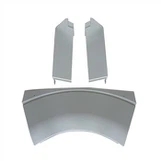
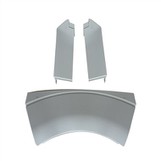
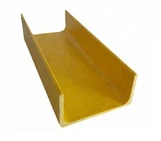
As a supplier of FRP pultruded rod profiles, we are committed to producing high-quality products that comply with all relevant regulations and standards. Our product range includes Transformer FRP Dovetail Cushion Block, FRP Pultruded Square Tube, and FRP Trapezoidal Profile Slot Wedge. These products are manufactured using advanced pultrusion technology and undergo strict quality control procedures to ensure that they meet the mechanical, chemical, fire, and dimensional requirements of various applications.
Conclusion and Call to Action
In conclusion, the regulations and standards related to FRP pultruded rod profiles play a crucial role in ensuring the quality, safety, and performance of these products. By complying with these standards, we can provide our customers with reliable and high-quality FRP pultruded rod profiles that meet their specific application needs.
If you are interested in our FRP pultruded rod profiles or have any questions about the regulations and standards, please feel free to contact us for further information and procurement discussions. We look forward to serving you and providing you with the best solutions for your projects.
References
- ASTM International. (Year). ASTM D3916 - Standard Test Methods for Tensile Properties of Pultruded Fiber - Reinforced Plastic Rod, Tube, and Shape Materials.
- ASTM International. (Year). ASTM D6110 - Standard Test Method for Determination of Charpy Impact Resistance of Notched Specimens of Plastics.
- ISO. (Year). ISO 14129 - Fibre - reinforced plastic composites — Determination of the in - plane shear properties by the ±45° tensile test method.
- ISO. (Year). ISO 178 - Plastics — Determination of flexural properties.
- Relevant national standards organizations for national standards (e.g., Standardization Administration of China for GB/T standards).