

Our factory covers an area of 10,000 square meters,owing 12 advanced hydraulic press and max press is 3000 tons.We also have CNC machine and surface grinding machine for sheet machining compenent part production.We have a variety of molding process means, such as molding, pultrusion, injection molding, blister, hand-made glass fiber reinforced products.We are glad to accept customer's product design and customer's requirements and will choose the most appropriate production solutions,striving to provide customers with a full range of systematic services.
Why Choose Us
Our Product
Our main products are SMC Fiberglass Insulation Sheet,GPO-3(UP GM203)Glass mat Insulation Sheet,and various SMC molded products, such as SMC medical enclosure/Shell,SMC Automobile exterior parts and other products.Our annual supply of composite material is over 3000tons.
Production Equipment
We have automatic sheet moulding compound batching equipment.12 advanced hydraulic press and max press is 3000 tons.6 CNC machines and 2 surface grinding machine.
Production Market
Our GPO-3 UPGM203 and SMC Insulation sheet,machining compenent parts and FRP pultruded profile,moulded product exported U.S market,Europe market such as Germany,Italy,Spain,France,Czech,Asian market of Malaysia,Vietnam,India and middle east market.
Our Service
We have benn always adhering to the business philophy of "customer-oriented, quality-assured, continuous improvement" and provides high quality environmental protection and high performance insulation materials for our customers.

GPO-3 is a fibreglass laminate with excellent thermal, mechanical, and electrical qualities for applications up to 155°C. It is made of polyester resin reinforced with fibreglass mat foundation.

UTR GPO-3 Electrical Grade Fiberglass Unsaturation Resin Sheet
UTR sheet,als known as GPO-3 sheet,UPGM203 sheet, is a thermoset unsaturation polyester polymer with fiberglass mat reinforcement.

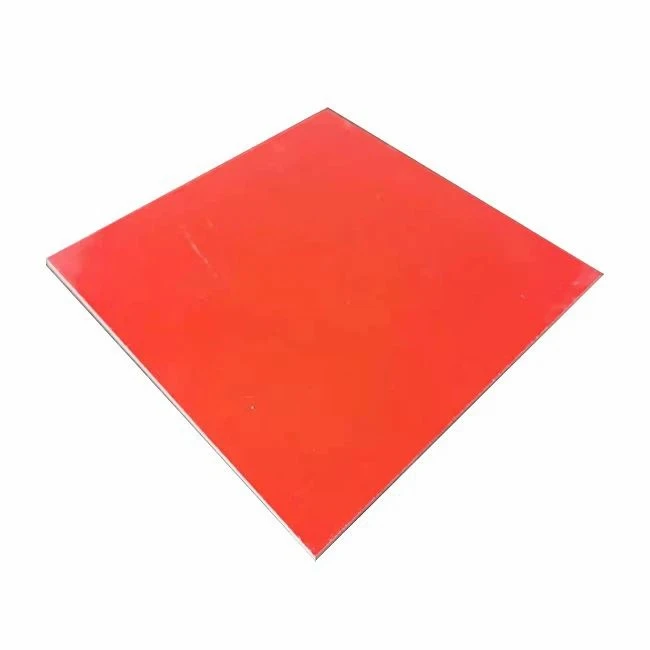
Thickness 30mm GPO-3 Molded Red Insulation Sheet
Unsaturated Polyester Glass Mat is known by the initials UPGM203. Since 2002, we have focused on producing UPGM203 sheet (also known as GPO-3 sheet). We are a reputable firm that combines the production of UPGM203 sheet with Glass Mat prepreg.

Electrical Grade GPO-3 Sheet For Arc Isolators
GP0-3 board is made of alkali free glass fiber felt sheet immersed with unsaturated polyester resin add additive by hot press to form into hard sheet insulation. GPO-3 is a glass reinforced thermoset polyester sheet material.

Unsaturation Resin Fiberglass Electrical Insulating Board
SMC Insulation Board is a multivalent electrical insulating rigid sheet made of fiberglass impregnated with high-grade polyester resin and various additives and pressed at high temperatures.

180℃ High-Temperature Resistant SMC Insulation Sheet
High-temperature resistant SMC insulation sheet, also known as sheet molding compound insulation sheet, is widely used in a variety of industries due to its excellent heat resistance, fire resistance, and insulation properties.

SMC Polyester Fiberglass Sheet Flat Board
SMC Insulating Sheet is produced using a high temperature, high pressure moulding technique to inject chopped fibreglass strands with unsaturated polyester resin. It is a superb FRP insulator of a certain sort.

Unsaturation Resin Fiberglass Sheet
Fiberglass Sheet is a multivalent electrical insulating rigid sheet made of fiberglass impregnated with high-grade polyester resin and various additives and pressed at high temperatures.

SMC Insulation Sheet is a multivalent electrical insulating rigid sheet made of glass fiber impregnated with high-grade polyester resin and various additives and pressed at high temperatures.
GPO-1 GPO-2 GPO-3 are created from a mixture of randomly arranged glass fibers that have been saturated with polyester resin and added to the right fillers. Choose amongst the three GPO-1, GPO-2, and GPO-3 grades of polyester glass-mat-sheet laminate.GPO-1 laminates are appropriate for all applications. GPO-2 laminates are used in situations that call for flame resistance. GPO-3 as resistance to carbon tracking and flame resistance are required, GPO-3 laminates are employed.
Advantages of Fibreglass Laminate Sheet
Durability
Fiberglass laminate sheets are reinforced with fibers that give the sheets varying degrees of flexibility and strength. The sheets are lightweight with a strong and resistant structure. They have a non-porous surface with a high resin content that does not retain moisture, which makes them useful in a wide variety of environments.
Electrical Characteristics
Fiberglass is an excellent insulation material, even in thinner layers. The combination of low moisture absorption, high dielectric strength and a low dielectric constant makes it the ideal material.
Fiberglass Incombustibility
Fiberglass is not combustible since it is a mineral material. It has high heat resistance. Fiberglass does not support or propagate flames and if exposed to heat, it does not emit toxic products or smoke. It does not burn and is basically unaffected by curing temperatures used in industrial processing. Fiberglass will retain approximately 50% of its strength at extremely high temperatures.
Dimensional Stability
Fiberglass is a dimensionally stable engineering material. It has no sensitivity to changes in temperature and hygrometry, making it very stable. It does not warp, bend, distort or shrink after exposure to extremely high or low temperatures as it has a low coefficient of linear expansion.
5 Common Applications For Fibreglass Laminate Sheet
Industrial
A full-sized sheet is often fabricated into other parts such as bushings, gears, bearings, or spacers. These parts are designed to use in welding machines, oil & gas equipment, and other insulation needs; they provide the strength and insulation needed for these applications. The material can be processed by cnc machining, laser cutting, or water jet cutting to create precise parts for unique applications. The sheets can also be cut to size into small, thin panels, that are used in printed circuit boards, or large, thick panels used for wear plates in steel mills. These panels can withstand substantial wear and tear.
Automotive
Very thin sheets of G-10/Fr4 are used under the dashboard in cars and helicopters to separate the electrical components. Laminated carbon fiber is also used for interior design in automobiles. Carbon fiber is available in a variety of different weaves include plain, twill, and geometric patterned weaves. A block of phenolic laminated canvas can be machined into a carburetor riser for cars, while thin carbon fiber sheets can be machined into reed valves for snowmobiles and motorcycles. A piece like this will last for an amazingly long time. Laminated sheets are also used as backing plates to mount hardware in boats.
Testing
G-10/Fr4 and G-11/Fr5 are perfect for electrical environments due to their dielectric insulating properties. They are also used as materials in labs for testing. Thin sheets of G-10 are a component in vibration testing. Static dissipative coating on top of G-10 material is used to provide static-controlled environments for electrical testing.
Medical
One of the medical uses can be found in stethoscopes. The flat diaphragm is formed from a flat, thin, rigid plastic disk of epoxy fiberglass plastic. Another use is with x-rays and mri machines. There is a plate of epoxy-based carbon fiber under the bed to create a safe environment for the patients using the machines.
Sports
Laminated sheets can be made in many different colors and layered or burled to create beautiful and unique patterns which develop a decorative material for knife handles and gun grips. Many kinds of laminates including G-10, G-11, carbon fiber, canvas, linen, and paper are used for these applications. Carbon fiber can also be used, in the form of thin tubes, to make arrows for hunting. Thicker carbon fiber tubes make up the structure for pop-up hunting blinds.
What Is The Difference Between GPO-3 Fibreglass Laminate Sheet And UPGM-203


GPO-3, which is essentially the same raw material as UPGM-203, is made of alkali free fiberglass mat impregnated with Unsaturated fat alkyd resin paste. In the production process, it is finally pressed together with relative preservatives. It is a forced plate insulating layer material with very high quality characteristics.
This type of insulation layer material can be applied to many commodities, such as isolation switches, high-voltage switchgear, baffles, and other raw material components. Although this type of raw material is widely used, many people are not aware that compared to other insulation layer products, this type of insulation layer board is not common. Among them, GPO's technical specialty name is Vaseline Ammonium Sulfate Antimycin. This kind of anti-static rubber is more widely used in various motor and household appliances, such as parts and baffles.
GPO-3 laminate has excellent electrical Dielectric strength. Because it is a conductor and insulator with stable characteristics and strong corrosion resistance, it can have a very good practical effect of insulating layer in complex natural environments such as high temperature, humidity and cold. It is more commonly used in the electrical industry. Secondly, it has excellent flame retardancy and is not easy to ignite in the event of a fire. It is very good for maintaining machinery and equipment from being burned down, and its physical properties are also very strong, making it difficult to be damaged under external high pressure compressive strength. It is also very good for maintaining electrical or industrial equipment. In addition, it also has excellent temperature resistance and maintains a certain degree of reliability even under constant external temperature rise.
The Production Process of Fibreglass Laminate Sheet
Molding
Molding is the process of constructing a part within a mold. Typically, precut reinforcement is placed one layer at a time into the mold and saturated with resin. When the part has achieved the desired thickness and orientation, it is left to cure. When it is demolded, it will have the exact shape of the mold surface.
Laminating
Laminating originally referred to applying a thin protective coating of resin and reinforcement over a surface such as wood. The term's use has broadened to include virtually any finished composite part, molded or otherwise.
Lamination schedule
This is a list of the individual layers and orientation of the plies used to construct a composite part, and typically specifies the ounce-weight of the reinforcement and the weave style.
Casting
Casting refers to pouring a large mass of resin into a cavity. The cavity can be a mold when casting parts, or it can be the backside filler for a tool when making the mold itself. It is necessary to use specialized casting resins which generate less heat during their cure and thus create less distortion in the final part. Fibrous fillers can be added as needed to strengthen the casting.
Sculpting
Sculpting is usually accomplished by carving a shape out of polyurethane foam and then laminating the surface. This can be done to create a plug for the molding process, or to shape a finished part in the case of moldless construction.
Core Materials and Construction in a Fibreglass Laminate Sheet
3d core
3d core offers impressive strength of the final product, with 3-d flexibility during the manufacturing process, is recommended for all applications where weight saving is essential:3d core is suitable for vacuum injection/ rtm. The matrix facilitates the infusion of the resin into the laminate. The basis of the process always is a well vented resin system with an appropriate curing time.
Aramid honeycomb core
Non-metallic structural materials made from nomex t722 paper bonded together and coated with phenolic resin, ideally suited to structural sandwich applications in the automotive, marine, rail, transport, and also sports industries. Density 48kg/m3
Armacell pet foam
100% recycled pet foam core sheets available here in 4 thicknesses. This material is used extensively in wind turbine production as well as many more areas. Its benefits include high strength to weight ratio, thermal stability, and insulation as well as acoustic insulation properties.
Armacell pet is suitable for use with a wide variety of resins including polyester, vinylester and epoxy.
Armacell pet core is made from 100% post-consumer plastics and is recyclable, see video above.
Corecork
Corecork is a natural and sustainable core material, compatible with existing sandwich core applications offering excellent fst (fire, smoke, and toxicity) properties with good mechanical and processing characteristics. The low density of corecork materials, their flexibility and excellent conformability make them possible to be easily integrated into fast cycles of production.
Corecork can be processed by hand layup, vacuum bagging and infusion processes and will withstand process temperatures up to a maximum of 150ºc. The unique properties of corecork such as: A structure of closed air cells, extremely low water absorption, rot resistance, excellent fire resistance and high level of attenuation of noise and vibrations make it an excellent core alternative to the composites industry - perfectly aligned with the new green classifications. See video above.
End grain balsa wood
This balsa for composites construction is flexible with a backing which allows itself to easily conform to curves. This is a flexible balsa made up of blocks on a light mesh backing. Applications which include wind turbine blades, marine hulls and decks, bulkheads, superstructures, floors and interiors, chemical storage tanks, transit vehicles - applications which specify high structural requirements with reduced weight and good cost effectiveness. Excellent strength/stiffness to weight ratio in sandwich laminates, high compressive strength, superior core to skin bond, excellent temperature resistance (-212oc to +160oc) major classification society approvals including for use below the waterline.
Epoxy foam liquids
2 component epoxy foaming formulations developed for "in situ" low density epoxy foam production. Foam final density is depending only on the choice of the resin. These systems are white but can be coloured by adding any epoxy compatible pigments. The hardener has only an influence on the curing time and thus the potential thickness of the one shot cast part. The mixes evolve in two separate steps: 1 fast expansion of the casting. 2 slow hardening of the mass. Performances "in situ" low density foam manufacturing. No hollow microspheres handling. Good adhesion onto most types of materials. Pb can be cast onto prepregs and wet epoxy resins curing.
How to Repair Fibreglass Laminate Sheet
Find all the damaged areas and inspect them closely. Is the damage confined to a small area of the surface? If so, this can usually be effectively repaired using either a polyester or epoxy filler.
Once the damage is filled and cured it can then be sanded back to a smooth finish before applying a suitable paint or topcoat. Or, is the fibreglass cracked, torn, shattered or crushed? As you inspect the damage, first consider if the piece is really worth repairing or should it be replaced entirely?
Look closely at the construction of the fibreglass laminate and see if it has a reinforcing core material, in addition to the glass strand mat on the outer layers. If it does, you'll need to fill in any damaged core material as well.
Mark the area by drawing an outline on the undamaged surface about an inch (25mm) around from the edge of the damage.
Remove all the damaged fibreglass and core material. Ensure you have aSanding down fibreglass stable base to apply the repair to. Cut away any loose or torn material.
Next, sand down the fibreglass around the damaged area in a 12:1 taper. Do this carefully to avoid sanding completely through the fibreglass.
Sanding the surface will give the resin a key to adhere to, while the taper will ensure the repair lies as level with the original material as possible and blends seamlessly into it. It will also give you a larger surface area for the resin to bond to.
If the damage is accessible from both sides, you can repeat this from the other side as well.
Once the right taper has been achieved, wipe the surface with a rag soaked in acetone. This will remove the fibreglass dust and any dirt remaining on the surface. Allow to this to evaporate fully.
If working on a double-sided repair, choose which side you will work on first. Attach a piece of plastic to the other side to prevent the fibreglass sheets from sagging through.
Measure the size of the damaged area. Cut one sheet of fibreglass the same size as this area. Next, measure the full size of the area you have sanded down and then cut a second fibreglass sheet the size of the entire area.
Next cut several sheets in different increments between these sizes. The total thickness of the sheets should be equal to the thickness of the material you are repairing.
If your fibreglass object has a damaged core material, cut a similar size of replacement core. Alternatively, you can fill the void with loose glass fibres combined with resin. However, it is best practice to use a core material of the same type as the existing one.
Prepare the resin following the manufacturer's instructions. You should mix a similar weight of resin to the total weight of the fibreglass sheets you have prepared.
Keep in mind that once you mix the resin, you will have limited time before it starts to set (often only about 20 minutes), so it is important to work quickly and avoid mixing too much resin at one time.
To avoid rushing and making mistakes, it is worth doing a test piece first to practice before working on your main repair.
Also make sure to weigh the resin and fibreglass carefully to ensure you don't mix too much and waste materials.
Paint a layer of resin onto the sanded down area. Apply resin to the smallest fibreglass sheet and layer it across the damaged area.
Repeat the process with the remaining fibreglass layer. Ensure the fibres in each layer are completely soaked with resin and free from air bubbles. Try to align the direction of the fibres in the sheets with the way the fibre is lain in the main piece.
As you work, wipe up any drips of resin quickly with the rag before they set. After all the layers are applied, go over the surface with a paddle roller to remove any air bubbles and smooth down the material.
Leave the resin to set. If you are doing a repair from both sides wait 48hrs before working on the other side. Remove the plastic and repeat the process from the other side.
Once the resin has set, inspect the repair. Test it to ensure it can withstand the required force, bear weight and so on.
If your repaired piece fails in these tests, it is best to discard it, as it might become a safety hazard and be no longer fit for purpose.
Sand down your repair to create a smooth and level surface. Wipe clean, then seal with the topcoat. The topcoat can be pigmented to match the rest of the piece and hide the repair.
FAQ
Q: What are fiberglass sheets used for?
Q: How long does fiberglass sheet last?
Q: How is fiberglass laminated?
Q: Is fiberglass better than plastic?
Q: How do you seal fibreglass?
Q: Is fiberglass water proof?
Q: Is fiberglass just plastic?
Q: Is fiberglass the same as PVC?
Q: Does fiberglass break easily?
Q: How do you make fiberglass look new again?
Hot Tags: gpo-1 gpo-2 gpo-3 fibreglass laminate sheet, China, manufacturers, cheap, quotation, free sample, foam insulation sheet, moulding compound price, industrial insulation sheet, D400 SMC composite manhole cover, replacement insulation sheet, power generation insulation sheet


