

Our factory covers an area of 10,000 square meters,owing 12 advanced hydraulic press and max press is 3000 tons.We also have CNC machine and surface grinding machine for sheet machining compenent part production.We have a variety of molding process means, such as molding, pultrusion, injection molding, blister, hand-made glass fiber reinforced products.We are glad to accept customer's product design and customer's requirements and will choose the most appropriate production solutions,striving to provide customers with a full range of systematic services.
Why Choose Us
Our Product
Our main products are SMC Fiberglass Insulation Sheet,GPO-3(UP GM203)Glass mat Insulation Sheet,and various SMC molded products, such as SMC medical enclosure/Shell,SMC Automobile exterior parts and other products.Our annual supply of composite material is over 3000tons.
Production Equipment
We have automatic sheet moulding compound batching equipment.12 advanced hydraulic press and max press is 3000 tons.6 CNC machines and 2 surface grinding machine.
Production Market
Our GPO-3 UPGM203 and SMC Insulation sheet,machining compenent parts and FRP pultruded profile,moulded product exported U.S market,Europe market such as Germany,Italy,Spain,France,Czech,Asian market of Malaysia,Vietnam,India and middle east market.
Our Service
We have benn always adhering to the business philophy of "customer-oriented, quality-assured, continuous improvement" and provides high quality environmental protection and high performance insulation materials for our customers.

GPO-3 is a fibreglass laminate with excellent thermal, mechanical, and electrical qualities for applications up to 155°C. It is made of polyester resin reinforced with fibreglass mat foundation.

UTR GPO-3 Electrical Grade Fiberglass Unsaturation Resin Sheet
UTR sheet,als known as GPO-3 sheet,UPGM203 sheet, is a thermoset unsaturation polyester polymer with fiberglass mat reinforcement.

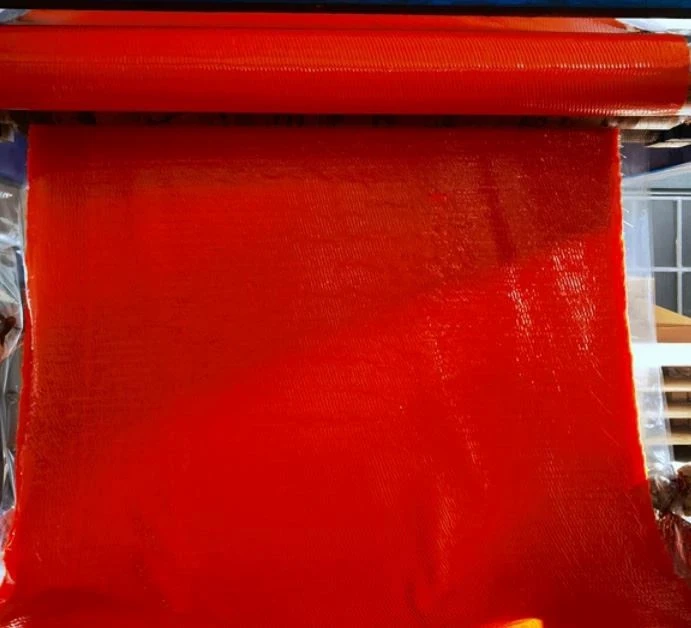
Thickness 30mm GPO-3 Molded Red Insulation Sheet
Unsaturated Polyester Glass Mat is known by the initials UPGM203. Since 2002, we have focused on producing UPGM203 sheet (also known as GPO-3 sheet). We are a reputable firm that combines the production of UPGM203 sheet with Glass Mat prepreg.

Electrical Grade GPO-3 Sheet For Arc Isolators
GP0-3 board is made of alkali free glass fiber felt sheet immersed with unsaturated polyester resin add additive by hot press to form into hard sheet insulation. GPO-3 is a glass reinforced thermoset polyester sheet material.

Unsaturation Resin Fiberglass Electrical Insulating Board
SMC Insulation Board is a multivalent electrical insulating rigid sheet made of fiberglass impregnated with high-grade polyester resin and various additives and pressed at high temperatures.

GPO-1 GPO-2 GPO-3 Fibreglass Laminate Sheet
GPO-1 GPO-2 GPO-3 are created from a mixture of randomly arranged glass fibers that have been saturated with polyester resin and added to the right fillers.

SMC Polyester Fiberglass Sheet Flat Board
SMC Insulating Sheet is produced using a high temperature, high pressure moulding technique to inject chopped fibreglass strands with unsaturated polyester resin. It is a superb FRP insulator of a certain sort.

Unsaturation Resin Fiberglass Sheet
Fiberglass Sheet is a multivalent electrical insulating rigid sheet made of fiberglass impregnated with high-grade polyester resin and various additives and pressed at high temperatures.

180℃ High-Temperature Resistant SMC Insulation Sheet
High-temperature resistant SMC insulation sheet, also known as sheet molding compound insulation sheet, is widely used in a variety of industries due to its excellent heat resistance, fire resistance, and insulation properties.
Sheet Molding Compound is an excellent insulating material, which has high-performance insulation resistance to prevent leakage, can maintain good dielectric properties at high frequencies, does not reflect, block the transmission of microwave, does not rust, and can be used for a long time. It has good corrosion resistance. It can effectively resist the corrosion of water, gasoline, alcohol, electrolytic salt, acetic acid, sodium potassium compound urine, asphalt, various acid-base soils, and acid rain. The material also has good impact resistance, easy machining, convenient drilling and cutting, and accurate positioning. It has high tensile strength, bending modulus, and impact toughness. It is a smokeless and non-toxic material. It contains no halogen, no harmful substances to the human body, and does not produce harmful gases when burned. It is an environmental protection material to meet the needs of future development.
Advantages of Sheet Molding Compound
1. The process has low requirements for temperature and pressure, large variable range, greatly reducing the cost of equipment and molds, and good reproducibility.
2. The fiber length is 50~40mm, and the quality uniformity is good. It is suitable for pressing large thin-walled products with little change in the interface.
3. The operating environment is clean and sanitary, and the working conditions are improved.
4. The surface of the products is bright and clean, and the surface quality is more ideal after using low shrinkage additives.
5. High production efficiency, short production cycle, easy to realize fully automated operation, and relatively low production cost.
Sheet Molding Compound's Composition
SMC is composed of unsaturated polyester resin, crosslinking agent, initiator, filler, thickener, release agent, glass fiber, and polymerization inhibitor. Among them, the first four categories mainly provide the material framework for products and increase strength. The last four categories are mainly for the properties of increased viscosity, corrosion resistance, insulation, and structural stability of the product.
1. Unsaturated polyester resin and crosslinking agents are the main body of SMC. Unsaturated polyester resins are usually polycondensed from unsaturated dicarboxylic acids (or anhydrides), saturated dicarboxylic acids (or anhydrides), and polyols. It has certain mechanical properties and strength, and the internal force is uniform. The crosslinking agent is mainly styrene. After the two are cross-linked, they are the main materials for the curing plasticity of the product, which play the role of connection, support, transmission balance, and protection.
2. The initiator causes the resin and crosslinker to cure and form in the resin paste stage. Its function is mainly to make the resin and the double bond in the cross-linking monomer such as styrene copolymerize so that the SMC can be solidified and formed in the mold cavity.
3. The filler occupies more than one-third of the sheet molding compound and can adjust the viscosity of the molding compound. It generally needs to have the characteristics of low specific gravity, low oil adsorption value, fewer pores, corrosion resistance, and low cost. The commonly used filler components are mainly CaCO3, Al(OH)3, and so on.
4. Thickeners give SMC a high-viscosity, non-sticky property. The preparation of sheet and bulk molding compounds requires a low viscosity of the resin to facilitate the impregnation of the glass fiber and filler by the resin. And compression molding requires a higher viscosity. Therefore, it is necessary to add a thickener before the molding process to convert the low viscosity of glass fiber impregnation into a high viscosity that is not sticky.
5. The release agent prevents the sheet molding compound from having an affinity with the metal mold surface. The release agent can prevent the unsaturated polyester resin from interacting with the surface of the metal mold during the plastic process of the resin mixture. Mainly long-chain fatty acids or salts represented by zinc stearate. Excessive use will easily reduce the performance of the product. The general usage accounts for 1~3% of the total product to ensure the quality of the product.
6. Glass fibers can enhance the corrosion resistance and insulation properties of SMC. Sheet molding compound usually chooses chopped glass fiber mats as reinforcement material. Excessive use will easily make the product too fluffy, and the use of too small a dose will not have an obvious strengthening effect on the product. The general usage is about 20%. In this way, the product can simultaneously meet the two processes of extrusion molding and compression molding.
7. Inhibitor increases the stability of SMC and prolongs the storage period. Since the initiator styrene will decompose slowly, causing the polymerization of the resin, adding an appropriate amount of free radical scavenger (polymerization inhibitor) can slow down the speed of styrene decomposition and prolong its storage period. Inhibitors are usually benzoquinones and polyvalent phenolic compounds.
Application of Sheet Molding Compound
SMC has the advantages of excellent electrical performance, strong corrosion resistance, lightweight, easy and flexible engineering design, etc. Its mechanical properties are comparable to some metal materials. Therefore, it is widely used in eight fields such as the automobile industry, railway vehicles, construction, electrical appliances, and communications.
Among them, in the early stage, it was mainly used in the form of insulating boards in the fields of construction, electrical appliances, and communications, and the technology is relatively mature. It was then used in the automobile industry to replace part of the steel and aluminum alloy materials of the body to reduce the weight of the car.
Under the background of the current energy saving and emission reduction and the development of new energy vehicles, the technology of automotive products continues to develop towards lightweight and high quality. Up to now, the application of SMC materials can be seen everywhere in daily life. It is reflected in wireless communications, explosion-proof electrical enclosures, ground insulation materials, bathrooms, and high-speed rail facilities.
Eight major applications and subdivision fields of SMC materials
|
Field |
Segmentation |
|
Auto industry |
Suspension parts, dashboards; body parts and components; under-hood parts |
|
Railway vehicle |
Window frames; Seats; Carriage panels and ceilings; Toilet components |
|
Construction sector |
Water tank; Bath products; Septic tank; Building formwork; Storage room components |
|
Electrical Appliances and Communications |
Electrical enclosures; electrical components and components (insulation tools) |
|
Bathroom |
Sink; Shower equipment; Overall bathroom; Sanitary components |
|
Ground material |
Anti-slip anti-static floor |
|
Explosion-proof electrical enclosure |
Explosion-proof electrical equipment shell products |
|
Wireless communication |
FRP reflector antenna, etc |
Corrosion Resistance of Sheet Molding Compound


SMC is the abbreviation of Sheet molding compound, SMC composite material, SMC molding compound or sheet molding compound (commonly known as FRP material). The main raw materials are composed of SMC special yarn, unsaturated resin, low shrinkage additives, fillers and various additives. SMC has the advantages of superior electrical performance, corrosion resistance, light weight, easy and flexible engineering design, and its mechanical performance can be comparable to some metal materials, so it is widely used in electrical, electronic, vehicle, construction, chemical, aviation and other industries in. As the most advanced and popularized electrical equipment housing manufacturing material in the world, SMC composite material has incomparable advantages with other non-metallic materials and metal materials:
Excellent electrical insulation performance: SMC is an excellent insulation material; it has high-performance insulation resistance, prevents leakage, and can maintain good dielectric properties at high frequencies. It does not reflect or block the propagation of microwaves. Rust can be used for a long time. Insulation protection and anti-creepage index comply with relevant DIN/VDE standards. This material not only has excellent electrical insulation, but also maintains good dielectric properties at high frequencies, is not subject to electromagnetic effects, and does not reflect electromagnetic waves.
High-quality flame-retardant materials: The flame-retardant performance of SMC composite materials can reach FVO level, and the smoke toxicity level is quasi-safe level. Our company's materials can meet UL94 requirements at home and abroad.
Excellent corrosion resistance: SMC composite materials can effectively resist the corrosion of seawater, gasoline, alcohol, electrolytic salt, acetic acid, hydrochloric acid, sodium potassium compounds, urine, asphalt, various acid-base soils and acid rain. The product itself has good anti-aging performance, and the surface of the product has a protective layer with strong UV resistance. The dual-protection product has higher anti-aging performance.
Excellent mechanical properties: SMC composite material is mainly composed of excellent insulating material dimensional network molecular structure and special reinforcing fiber, so that the material has good impact resistance, easy to machine, easy to drill and cut, and accurate positioning , Has high tensile strength, bending and impact toughness.
Environmental protection and non-toxic materials: SMC composite material is a kind of halogen-free and no harmful substances to the human body. It is a new type of environmentally friendly material to meet the needs of future green development.
Low thermal conductivity and small expansion coefficient: SMC composite material is a kind of high temperature resistance and low thermal deformation rate, and its thermal insulation can reduce the influence of environmental temperature difference on the inside of the box. Compared with metal materials, it can effectively reduce condensation inside the box. happened.
Excellent UV resistance and anti-aging performance: Among non-metallic materials, fiber-reinforced polyester materials have excellent anti-aging properties. The anti-aging performance test shows that the maximum aging degree of the surface is small in different places of use and different climatic zones, so it has no obvious impact on the mechanical properties of the cabinet.
Problems And Solutions That Easily Occur In The Sheet Molding Compound Process
Foaming on the surface or bulging inside the product
The cause of this phenomenon may be that the content of moisture and volatile matter in the material is too high; the mold temperature is too high or too low; the pressure is insufficient and the holding time is too short; the heating of the material is uneven Evenly. The solution is to strictly control the volatile content in the material, appropriately adjust the mold temperature, and reasonably control the molding pressure and holding time. Improve the heating device so that the material is heated evenly.
Product deformation and warpage
This phenomenon may be caused by incomplete curing of FRP/SMC, low molding temperature and insufficient holding time; uneven thickness of the product, resulting in uneven shrinkage.
The solution is to strictly control the curing temperature and holding time; select the molded material with a small shrinkage rate; under the premise of meeting the requirements of the product, the structure of the product is appropriately changed to make the thickness of the product as uniform as possible or smooth transition.
Cracks
This phenomenon mostly occurs in products with inserts. The reason may be. The structure of the inserts in the product is unreasonable; the number of inserts is too much; the demoulding method is unreasonable, and the thickness of each part of the product is too different. The solution is to change the structure of the product under permitted conditions, and the insert must meet the requirements of molding; reasonably design the demoulding mechanism to ensure the average ejection force.
The product is under pressure, local lack of glue
The reason for this phenomenon may be insufficient pressure; excessive fluidity of the material and insufficient feeding amount; too high temperature, so that part of the molded material solidifies prematurely.
The solution is to strictly control the molding temperature, pressure and press timing; ensure sufficient materials and no shortage of materials.
Product sticking mold
Sometimes the product sticks to the mold and is not easy to release, which seriously damages the appearance of the product. The reason may be that the internal release agent is missing in the material; the mold is not cleaned and the release agent is forgotten; the surface of the mold is damaged. The solution is to strictly control the quality of materials, carefully operate, and repair mold damage in time to achieve the required mold finish.
The waste edge of the product is too thick
The reason for this phenomenon may be unreasonable mold design; too much material added, etc. The solution is to carry out a reasonable mold design; strictly control the feeding amount.
The product size is unqualified
The reason for this phenomenon may be that the quality of the material does not meet the requirements; the feeding is not strict; the mold is worn; the mold design size is not accurate, etc. The solution is to strictly control the quality of the materials and accurately feed the materials. The size of the mold design must be accurate. Damaged molds must not be used.
The temperature change during the molding process of FRP is more complicated. Because plastic is a poor conductor of heat, the temperature difference between the center and the edge of the material is large at the beginning of molding, which will cause the curing and cross-linking reaction to not start at the same time in the inner and outer layers of the material.
On the premise of not damaging the strength and other performance indicators of the product, appropriately increasing the molding temperature is beneficial to shorten the molding cycle and improve the quality of the product.
If the molding temperature is too low, not only the melted material has high viscosity and poor fluidity, but also because the crosslinking reaction is difficult to proceed fully, the product strength is not high, the appearance is dull, and mold sticking and ejection deformation occur during demolding.
The molding temperature is the mold temperature specified during molding. This process parameter determines the heat transfer conditions of the mold to the material in the cavity, and has a decisive influence on the melting, flow and solidification of the material.
The surface layer material is cured earlier by heat to form a hard shell layer, while the later curing shrinkage of the inner layer material is limited by the outer hard shell layer, resulting in residual compressive stress in the surface layer of the molded product, and the inner layer is There is residual tensile stress, the existence of residual stress will cause the product to warp, crack and decrease the strength.
Therefore, taking measures to reduce the temperature difference between the inside and outside of the material in the mold cavity and eliminating uneven curing is one of the important conditions for obtaining high-quality products.
The SMC molding temperature depends on the exothermic peak temperature and curing rate of the curing system. Usually the temperature range with a slightly lower curing peak temperature is the curing temperature range, which is generally about 135~170℃ and determined by experiment; the curing rate is fast The temperature of the system is lower, and the temperature of the system with slow curing rate is higher.
When forming thin-walled products, take the upper limit of the temperature range, and forming thick-walled products can take the lower limit of the temperature range. However, when forming thin-walled products with a large depth, the lower limit of the temperature range should also be taken due to the long process to prevent material solidification during the flow process.
FAQ
Q: What is sheet molding compound used for?
Q: What is the difference between fiberglass and sheet molding compound?
Q: How to make sheet molding compound?
Q: What are the advantages of SMC?
Q: What is the difference between SMC and BMC?
Q: What is the raw material of SMC?
Q: What is the process of SMC molding?
Q: Is SMC a plastic?
Q: What is the composition of sheet molding compound?
Q: What is the formulation of sheet molding compound?
Hot Tags: sheet molding compound, China, manufacturers, cheap, quotation, free sample, cheap price insulation sheet, cheap price insulation board, insulation cover, medical equipment enclosure, electrical insulation material, low price smc sheet


