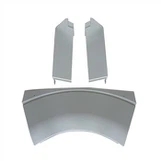
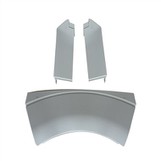
Hey there! As a supplier of FRP U Beam Channels, I get asked a lot about how to connect these bad boys together. It's a crucial step when you're using FRP U Beam Channels for various projects, whether it's for construction, industrial applications, or DIY stuff. So, let's dive right in and talk about the different ways to connect FRP U Beam Channels.
1. Using Mechanical Fasteners
One of the most straightforward methods is using mechanical fasteners. This includes bolts, nuts, and washers. The process is pretty simple, but it does require a bit of precision.
First off, you need to mark the holes on the U Beam Channels where you want to insert the fasteners. Make sure the marks are aligned on both channels. You can use a drill to create the holes. It's important to use the right drill bit size that matches the diameter of the bolts you're using.
Once the holes are drilled, insert the bolts through the holes in both channels. Then, add a washer on the other side and tighten the nut. Tightening is crucial as it ensures a secure connection. But be careful not to over - tighten, as it can damage the FRP material.
The advantage of using mechanical fasteners is that they are easy to install and can be removed if needed. This is great for projects where you might need to disassemble and reassemble the structure. However, one drawback is that the holes drilled in the channels can potentially weaken the structure over time, especially if the load on the channels is high.
2. Adhesive Bonding
Adhesive bonding is another popular method for connecting FRP U Beam Channels. There are special adhesives designed for FRP materials that can provide a strong and durable bond.
Before applying the adhesive, you need to clean the surfaces of the U Beam Channels thoroughly. Any dirt, grease, or debris can reduce the effectiveness of the adhesive. You can use a mild solvent to clean the surfaces and then let them dry completely.
Next, apply the adhesive evenly on one of the surfaces that you want to bond. Then, press the two channels together firmly. You might need to use clamps to hold the channels in place while the adhesive cures. The curing time can vary depending on the type of adhesive you're using, so make sure to follow the manufacturer's instructions.
The benefit of adhesive bonding is that it creates a seamless connection. There are no holes drilled in the channels, which means the overall strength of the structure is maintained. Also, the bond can be very strong, providing excellent resistance to shear and tensile forces. However, adhesive bonding requires more time and patience as you have to wait for the adhesive to cure. And if the bonding is not done correctly, it can lead to a weak connection.
3. Welding (for Some FRP Types)
In some cases, welding can be used to connect FRP U Beam Channels. However, this is not applicable to all types of FRP. Only certain thermoplastic FRP materials can be welded.
Welding FRP involves heating the surfaces of the channels to a specific temperature and then fusing them together. Special welding equipment is required for this process. The welder needs to have the right skills and knowledge to ensure a proper weld.
The advantage of welding is that it creates a very strong and permanent connection. It can withstand high loads and is suitable for heavy - duty applications. But the downside is that the equipment and skills required for welding FRP are not as common as those for mechanical fasteners or adhesive bonding. Also, welding can be more expensive due to the cost of the equipment and the expertise needed.
4. Interlocking Systems
Some FRP U Beam Channels come with interlocking systems. These are designed in such a way that the channels can be easily connected without the need for additional fasteners or adhesives.
The interlocking parts are usually pre - designed and can be snapped or slotted together. This makes the installation process very quick and easy. It's a great option for DIY projects or when you need to assemble the structure in a short time.
However, the strength of interlocking systems might not be as high as that of mechanical fasteners, adhesive bonding, or welding. They are more suitable for light - duty applications where the load on the channels is relatively low.
Related Products
If you're interested in other FRP or related products, we also offer GPO - 3 L Profile Angle Profile. This product has its own unique applications and can be used in combination with FRP U Beam Channels in some projects.
For automotive applications, our SMC Molding Automotive is a great option. It offers high strength and durability, which is essential for automotive parts.
And if you need a different profile, our SMC H Profile might be just what you're looking for. It can be used in various industrial and construction projects.
Conclusion
Connecting FRP U Beam Channels together can be done in several ways, each with its own advantages and disadvantages. The choice of the connection method depends on the specific requirements of your project, such as the load, the environment, and the ease of installation.


As a supplier of FRP U Beam Channels, we are here to help you with any questions you might have about the products or the connection methods. Whether you're a professional contractor or a DIY enthusiast, we can provide you with the right advice and products to ensure your project is a success.
If you're interested in purchasing our FRP U Beam Channels or have any questions about how to connect them, feel free to reach out to us. We're always happy to assist you in finding the best solutions for your needs.
References
- "FRP Materials Handbook"
- Manufacturer's instructions for FRP adhesives and fasteners
- Industry standards for FRP construction