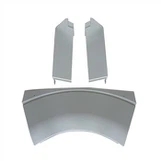
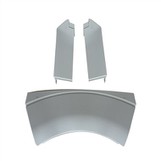
In the dynamic world of sports product manufacturing, the choice of molding method can significantly impact the quality, performance, and cost of the final products. As a dedicated supplier of SMC Molding Sports Product, I've witnessed firsthand the unique advantages that Sheet Molding Compound (SMC) molding brings to the table when compared to other traditional molding methods. In this blog, I'll delve into a comprehensive comparison of SMC molding with other prevalent molding techniques in the context of sports product manufacturing.
Understanding SMC Molding
Before we dive into the comparison, let's briefly understand what SMC molding is. SMC is a composite material made from a mixture of thermosetting resin, chopped glass fibers, fillers, and additives. The material is pre - formed into sheets, which are then placed into a mold and compressed under heat and pressure. This process results in a high - strength, lightweight, and dimensionally stable product.
Comparison with Injection Molding
1. Material Properties
Injection molding is a widely used process in sports product manufacturing, especially for producing plastic components. However, when it comes to material properties, SMC has a clear edge. SMC products offer superior strength - to - weight ratio. For example, in the production of sports equipment frames, SMC can provide the necessary structural integrity while being significantly lighter than injection - molded plastic parts. This is crucial in sports where weight can affect performance, such as cycling or running.
The glass fibers in SMC also contribute to its excellent stiffness and impact resistance. In contrast, injection - molded plastics may be more prone to deformation and damage under high - impact situations. For instance, a SMC - molded protective gear can withstand more force without cracking or breaking compared to an injection - molded counterpart.

2. Design Flexibility
Both SMC molding and injection molding offer a certain degree of design flexibility. However, SMC molding allows for more complex geometries in a single part. In sports product manufacturing, this means that designers can create integrated components with features like ribs, bosses, and undercuts without the need for multiple parts and assembly. For example, a SMC - molded SMC H Profile can be designed with specific cross - sectional shapes and internal structures to optimize its performance in sports applications, such as being used as a support structure in a sports equipment frame.
Injection molding, on the other hand, may face limitations in achieving complex shapes due to issues like flow patterns and cooling rates. This can lead to additional design compromises or the need for multi - shot molding processes, which can increase costs.
3. Cost - effectiveness
In the long run, SMC molding can be more cost - effective for large - scale production of sports products. Although the initial tooling costs for SMC molding are relatively high, the material cost per part is often lower than that of injection - molded plastics, especially when considering the performance requirements. Additionally, SMC parts require less secondary processing, such as painting or finishing, which further reduces the overall production cost.
Injection molding may have lower initial tooling costs for small - scale production, but as the production volume increases, the material and processing costs can add up. Moreover, the need for more complex molds and potential for higher scrap rates in injection molding can also contribute to increased costs.
Comparison with Compression Molding of Traditional Materials
1. Mechanical Performance
Compression molding has been used for a long time in various industries, including sports product manufacturing. Traditional compression - molded materials like rubber or some thermoplastics may not offer the same level of mechanical performance as SMC. SMC's high - strength characteristics make it suitable for applications where high loads and stresses are involved. For example, in the production of sports equipment bases or supports, SMC can provide better load - bearing capacity and resistance to fatigue compared to traditional compression - molded materials.
2. Surface Finish and Aesthetics
SMC molding can produce parts with a smooth and high - quality surface finish. This is important in sports products, as a good surface finish not only enhances the visual appeal but also reduces the risk of abrasion or injury to the user. In contrast, compression - molded parts made from traditional materials may have a rougher surface, which may require additional finishing operations to achieve an acceptable appearance.
3. Environmental Considerations
SMC materials are generally more environmentally friendly compared to some traditional compression - molded materials. SMC can be recycled to some extent, and the manufacturing process generates less waste. In the sports industry, where there is an increasing focus on sustainability, this is a significant advantage. Traditional compression - molded materials may be more difficult to recycle or may involve the use of chemicals that are harmful to the environment.
Comparison with Die - Casting
1. Weight
Die - casting is commonly used for producing metal parts in sports product manufacturing. However, one of the major drawbacks of die - casting is the weight of the final products. SMC parts are much lighter than die - cast metal parts, which is a huge advantage in sports where lightweight equipment is desired. For example, in the production of sports helmets or bicycle components, the use of SMC instead of die - cast metal can reduce the overall weight of the equipment without sacrificing strength.

2. Corrosion Resistance
Metal parts produced by die - casting are prone to corrosion, especially in outdoor sports environments. SMC, on the other hand, has excellent corrosion resistance. This means that SMC - molded sports products can maintain their performance and appearance over a longer period of time, even when exposed to harsh weather conditions or chemicals. For instance, a SMC - molded SMC U Beam Channel Profile used in outdoor sports facilities will not rust or corrode like a die - cast metal equivalent.
3. Production Speed and Cost
While die - casting can be a relatively fast process for producing parts, the cost of tooling and the raw materials can be high. SMC molding can offer a good balance between production speed and cost. Once the initial tooling is set up, SMC molding can produce parts at a reasonable rate, and the cost of SMC materials is often more affordable than die - casting metals.
Real - World Applications in Sports Product Manufacturing
The unique properties of SMC molding make it suitable for a wide range of sports products. In the production of sports helmets, SMC's high - strength and lightweight characteristics provide excellent protection without adding excessive weight to the athlete's head. SMC - molded frames for bicycles offer a combination of stiffness and lightness, improving the bike's performance and handling.
In sports equipment such as goalposts, benches, and bleachers, SMC's corrosion resistance and durability ensure a long service life, even in outdoor environments. The design flexibility of SMC also allows for the creation of aesthetically pleasing and functional sports products, meeting the demands of both athletes and consumers.

Conclusion
In conclusion, SMC molding offers several distinct advantages over other molding methods in sports product manufacturing. Its superior material properties, design flexibility, cost - effectiveness, and environmental friendliness make it an ideal choice for producing high - quality sports products. Whether it's for lightweight and strong components, corrosion - resistant structures, or complex - shaped parts, SMC molding can meet the diverse needs of the sports industry.
If you're in the market for high - performance sports products and are interested in exploring the benefits of SMC molding, I encourage you to reach out for a procurement discussion. We're committed to providing top - notch SMC Molding Sports Product that meet your specific requirements.
References
- “Composites in Sports Equipment: Technology and Applications” by X. Liang and J. Summerscales.
- “Plastics Processing: Modeling and Simulation” by R. G. Osswald and T. Turng.
- Industry reports on sports product manufacturing and molding technologies.